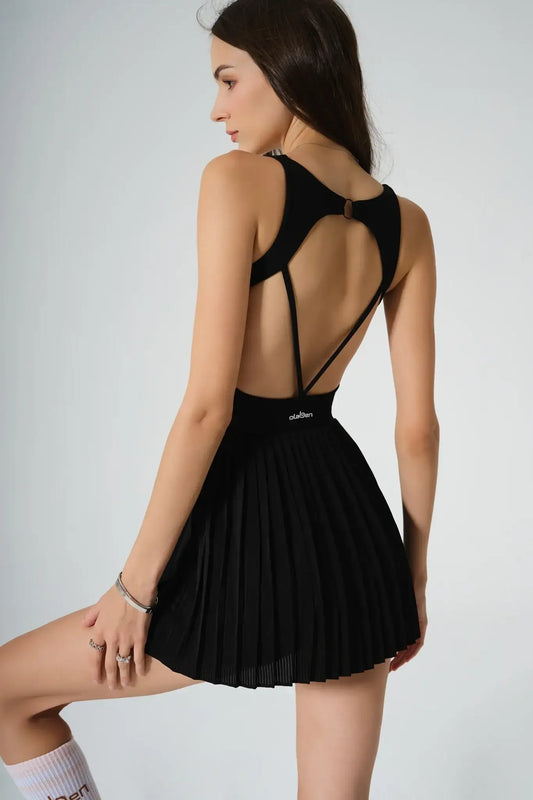


Seated cable rows are one of the most basic yet highly effective back exercises, helping to develop the latissimus dorsi and middle back muscles and significantly improve posture. However, not everyone knows how to perform seated cable rows correctly to optimize effectiveness and avoid injury. In this article, Olaben will help you understand what Seated Row is, its benefits, and provide detailed instructions on how to perform the exercise correctly, suitable for both beginners and experienced practitioners.
What is Seated Row?
Seated Row (full name:Seated Cable Row), also known as Pulley Row or Low Row. The seated cable pull exercise is one of the most popular and effective back exercises in gyms today. Thanks to its ability to engage multiple muscle groups and its ease of technique control, this exercise is always on the "must-have" list of back workout programs.
Unlike isolation exercises that focus on only one muscle group, Seated Cable Row is compound exercises. This means that when performing cable pull exercises, the body engages multiple muscle groups simultaneously. Thanks to its wide range of motion, Seated Row is suitable for...all levels. From beginners to seasoned trainees, they frequently appear in professional training programs.
Seated row is not only a basic back exercise but also an optimal choice for developing upper body thickness, strength, and balance. If you're looking for an effective and safe exercise to improve your back muscles, Seated Cable Row is definitely an option you shouldn't overlook.

Which Muscles Does the Seated Row Work?
- Middle back muscles (Rhomboids & Middle Trapezius): In the Seated Row exercise, middle back muscles play a key role. When you pull the handle towards your abdomen, your two shoulder blades will contract closer together, which is the primary function of the rhomboids and middle trapezius.
- Latissimus Dorsi: The latissimus dorsi (lats) are heavily involved in the initial phase when you begin pulling the handles toward your body. This muscle group helps to open the back, create a V-shape, and increase overall strength.
- Biceps Brachii: During pulling, exercise involves bending your elbows to bring the handles closer to your body. However, if you use your hands too much, the effect on your back will be reduced.
- Rear deltoids (back of the shoulder): The rear delts are most effectively activated when the elbows are pulled back past the torso. This is a crucial muscle group for improving the thickness and balance of the posterior shoulder region.
- Lower Trapezius muscle: Lower traps help keep the shoulder blades in a stable position and pulled downward, preventing shrugging, a very common mistake when doing Seated Rows.
- Lower back muscles (Erector Spinae): Although not directly involved in pulling, lower back muscles play a crucial role in keeping the spine in a neutral position, helping you maintain proper posture and avoid injury.
Benefits of Seated Cable Row Exercises
Seated row is one of the most important yet often underestimated back exercises. Not only does it effectively support back muscle development, but it also offers numerous benefits for posture, strength, and body balance. Below are some of the outstanding benefits of seated row that you shouldn't overlook.
Effectively develop back muscle thickness.
While vertical pull-ups like the Lat Pulldown primarily help to widen the back horizontally, Seated Row focuses on developing thickness. This creates depth and muscle definition when viewed from the side.
Building back thickness is crucial for achieving a balanced and aesthetically pleasing physique. However, many people often focus only on width while neglecting this important aspect, resulting in a back lacking real prominence and strength.
Improve posture, reduce shoulder and neck pain.
Office workers or those who sit for long periods often experience a forward-slouching shoulder due to tight chest muscles and weak middle back muscles. Seated Row helps activate and strengthen the middle back muscles, thereby pulling the shoulders back to their natural position.
Regular exercise not only improves posture but also helps reduce pressure on the neck and shoulders, limiting the risk of chronic pain.
Safe and suitable for beginners.
Compared to exercises like the Bent Over Row, which require advanced technique and good balance, the Seated Row is more beginner-friendly. The machine's seat and support points make movement control easier.
This allows users to focus on feeling their back muscles without putting pressure on their lower back, minimizing the risk of injury during the initial adjustment phase.
Strengthen your hand and grip strength.
Throughout the Seated Row exercise, you need to maintain a firm grip on the handles. This significantly improves hand and forearm strength.
Grip strength is crucial in many exercises such as deadlifts, pull-ups, and farmer's walk. Therefore, Seated Rows not only support the back but also improve overall performance during training.
Balanced muscle development on both sides.
A major advantage of Seated Row with cable machines is the ability to distribute the pulling force evenly between both sides of the body. This helps to prevent the stronger arm from "carrying" the weaker arm, as is often the case when using barbells.
This makes it easier to identify and correct muscle imbalances, helping the body develop harmoniously and reducing the risk of injury due to uneven force distribution.

Step-by-Step Guide to Seated Cable Row Techniques
Before you begin, set a weight that suits your ability. The ideal weight is one where you feel challenged around reps 10–12 but maintain proper technique throughout the set. Attach the V-bar handles to the lower cable hook of the machine to optimize the pulling angle and activate your middle back muscles more effectively.
Step 1: Establish the correct sitting posture.
Sit firmly in the machine seat, with both feet placed securely on the pedals. Keep your knees slightly bent naturally, avoiding locking them to reduce pressure on the knee joints.
Lean your body slightly forward at an angle of about 10–15 degrees, keeping your chest out and your back straight. This position allows for maximum stretching of the back muscles before beginning the pulling motion.
Step 2: Grasp the handles and activate your back muscles.
Grasp the V-shaped handles with your palms facing each other. Before pulling, perform a “shoulder pull down and back” motion. Imagine you’re trying to bring your shoulder blades toward your back pockets. This activates the middle back and trapezius muscles, while also providing a stable foundation for the entire movement.
Step 3: Pull the handle towards your stomach.
Keeping your body stable, begin pulling the handle in a straight line towards your navel. Keep your elbows close to your body and pull as far back as possible.
When your hands touch your abdomen, tighten your middle back muscles for 1–2 seconds to maximize the muscle contraction effect. Exhale throughout the pulling phase.
Step 4: Control the release phase (eccentric)
This is an important but often overlooked part. Slowly extend your arm back to the starting position over 2–3 seconds, maintaining complete control of the movement.
Avoid letting the handles spring forward due to inertia, as this will reduce the effectiveness of the workout and increase the risk of injury.
When your arms are nearly fully extended, allow your shoulder blades to open naturally so that your back muscles are stretched to their maximum. Inhale during this phase.
Step 5: Repeat with the appropriate number of sets and reps.
Depending on your training goals, you can apply the following number of sets and reps:
- Muscle building: 3–4 sets, 10–15 reps per set
- Increase strength: 3–5 sets, 6–8 reps per set with heavier weights.
Maintaining proper technique in every rep is more important than lifting heavy weights.

Seated Row Workout Outfits: What to Wear for a Better Workout?
Seated Row is a seated exercise, but don't underestimate the importance of proper attire. Correct posture requires a naturally straight spine, chest out, and shoulders pulled back; all of these requirements will be hindered if your clothing is too tight, non-breathable, or causes uncomfortable chafing during the exercise.
Upper body:
- Sports bra: Good support is an ideal choice for women when doing back-stretching exercises, helping to maintain comfort throughout long sets without shifting.
- Tank top: Breathable sportswear allows for full range of motion in the shoulders and arms, while also making it easy to observe shoulder posture in the mirror.
- Short-sleeved shirt or long-sleeved shirt: Sportswear made from 4-way stretch material is also suitable, especially long-sleeved tops which help reduce friction if the forearms rub against the body during deep pull-ups.
Lower body:
- Leggings: High-waisted pants are the most popular choice for seated exercises, providing a snug fit without bunching or bunching in the thigh and hip area when sitting upright.
- Sports trousers: It's also suitable, especially in air-conditioned gyms, as long as the material is stretchy enough not to restrict posture.
Check out the collection now sportswear at Olaben from sports shirt, bloomers arrive with sportwear set along with trendy accessories.
Seated Row Variation: An Effective Back Workout Solution Without Machines
Seated Row is one of the back exercises, a popular choice among gym-goers for developing middle back muscles and improving pulling strength. However, a major drawback is the need for specialized equipment, making it difficult for those who train at home. A simpler yet equally effective alternative is Band Seated Row, uses elastic cords to simulate the horizontal pulling motion similar to a cable machine.
Band Seated Row allows you to work out anywhere with just a low-cost and readily available resistance band. By choosing the right level of resistance, you can still generate enough force to stimulate back muscle growth. Additionally, this exercise is flexible in intensity, suitable for both beginners and experienced exercisers.
To perform this exercise, simply sit on the floor with your legs extended, and hook the elastic band around your foot or a fixed point in front of you.
- Keep your back straight, chest open, and shoulders stable, then pull the rope towards your stomach with your elbows close to your body.
- When you reach maximum muscle contraction, tighten your back muscles for 1–2 seconds, then slowly release back to the starting position over 2–3 seconds to ensure control of the movement.
- The breathing rhythm remains the same: exhale when pulling and inhale when releasing.
Although the resistance of an elastic band isn't exactly the same as a cable machine because it changes with stretch, a Seated Row band still provides comparable results if you maintain proper technique and good control over each rep. This is an ideal choice for those who train with resistance bands at home or for anyone who wants to optimize costs while still ensuring effective back muscle development.
Frequently Asked Questions
What is the difference between Seated Row and Lat Pulldown?
Lat Pulldown is a vertical pull from top to bottom, primarily developing the width of the back and latissimus dorsi muscles. Seated Row is a horizontal pull from front to back, primarily developing the thickness of the back and middle back muscles. Both complement each other and should be included in the same back training program.
Which type of handle should I use: a V-handle, a straight handle, or a rope handle?
The V-shaped handle (palms facing each other) is the default and most elbow-friendly option, suitable for most users. The wide, straight handle focuses more on the upper middle back muscles. The rope handle allows for a more natural range of wrist rotation at the point of maximum muscle contraction.
What number of reps and sets are appropriate for Seated Row?
To build muscle: 3–4 sets 10–12 reps. To increase strength: 4–5 sets 6–8 reps. To build endurance: 2–3 sets 15–20 reps. Beginners should start with 3 sets of 12 reps at a comfortable weight to get used to the movement before increasing the weight.
Seated Cable Row is a simple exercise in form but requires finesse in technique to be truly effective. Proper execution, proper equipment, and sufficient recovery are all you need to build a thick and strong back over time.