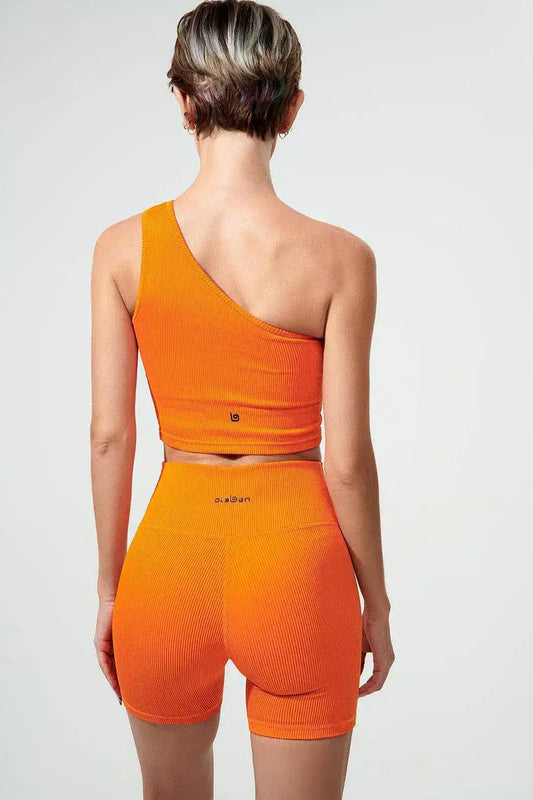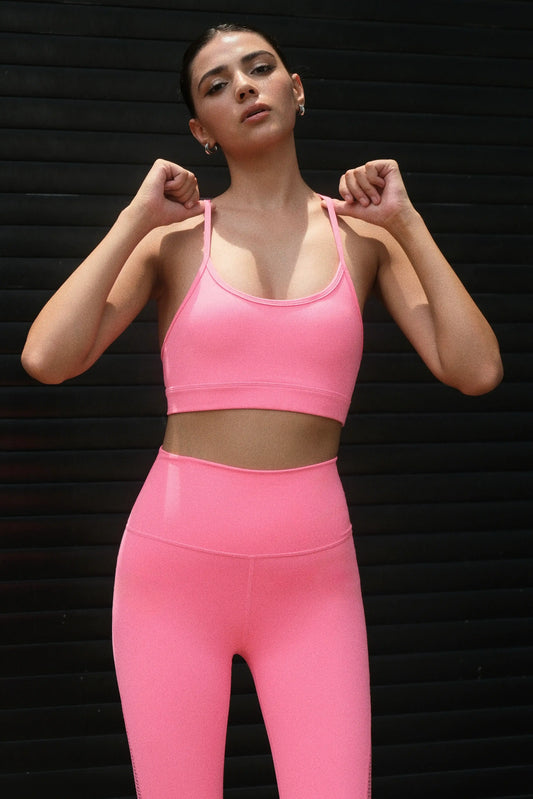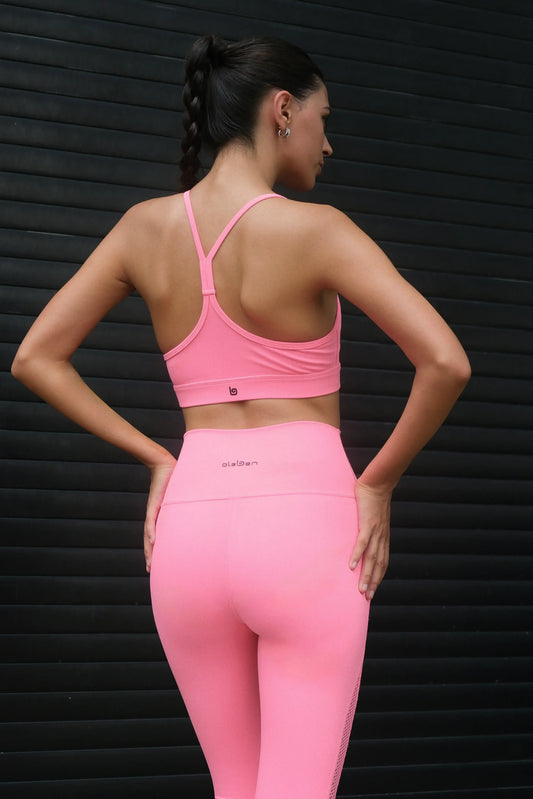
Polyamide (nylon) is softer, stronger, and more elastic, so it feels smooth and holds up to abrasion. Polyester wicks sweat better, dries faster, costs less, and keeps its color longer in sun and washing. For skin-soft leggings, lean nylon. For high-sweat cardio and bold prints that stay bright, lean polyester.
Both are synthetic fibers, and both show up on the care label of almost every legging, sports bra, and running shirt you own. They behave differently, though, and the gap matters once you sweat in them. Here is how polyamide and polyester compare, how each is made, and which one to pick for the way you actually train. For a deeper look at the fiber itself, see our guide on what polyamide is.
Polyamide vs Polyester at a Glance
|
Property |
Polyamide (Nylon) |
Polyester |
|
Feel / softness |
Softer, silkier hand |
Slightly crisper, more textured |
|
Strength |
Higher tensile strength, best abrasion resistance |
Strong, but yields to nylon |
|
Stretch / elasticity |
More natural stretch and recovery |
Less stretch, needs spandex for flex |
|
Moisture-wicking |
Absorbs more water (~4% regain), wicks less |
Barely absorbs (~0.4% regain), wicks well |
|
Drying speed |
Slower to dry |
Quick-drying |
|
Durability |
Excellent against friction and pilling |
Very good, resists stretching out |
|
Wrinkle / shape retention |
Good, can relax slightly when damp |
Excellent, springs back, holds shape |
|
UV / color |
Fades faster in strong sun |
Holds color, more UV-stable |
|
Cost |
More expensive to produce |
Cheaper, higher volume |
|
Sustainability |
Recyclable as Econyl (regenerated nylon) |
Recyclable as rPET (recycled bottles) |
The numbers on moisture come from standard textile moisture-regain figures: nylon sits near 4%, polyester near 0.4%. That single difference explains most of the trade-off. Nylon takes in more water, which makes it feel soft and cool but slower to dry. Polyester repels water, so it moves sweat to the surface and dries fast.

How Each One Is Made
Polyamide (nylon) was the first fully synthetic fiber, developed by DuPont in the 1930s. It is made by reacting two chemical building blocks (a diamine and a diacid) into long polymer chains, then melting and spinning them into filaments. The result is a smooth, strong, slightly elastic fiber that took over from silk in stockings and never left.
Polyester is spun from PET, the same plastic family used in drink bottles. Petroleum-based ingredients are polymerized, melted, and extruded into fibers. It is the workhorse of the textile world: Textile Exchange reports polyester makes up more than half of all fiber produced globally, which is a big reason it is cheaper than nylon.
Neither fiber does everything alone in activewear. Most performance pieces blend nylon or polyester with spandex (also called elastane or Lycra) for four-way stretch. The base fiber sets the feel; the spandex sets the flex.
Which Is Better for Activewear?
There is no single winner. The right pick depends on the piece and the sweat level.
- Legging: Vải nylon-spandex thắng ở cảm giác mềm sát da và độ phục hồi không lộ khi squat, nên nhiều mẫu legging cao cấp ưu tiên polyamide. Legging polyester-spandex giữ họa tiết và màu lâu hơn, giá dễ chịu hơn. Xem cả hai kiểu trong bộ sưu tập legging nữ.
- Áo bra: Nylon dịu với da khi mặc lâu, còn phần polyester giúp đẩy mồ hôi khỏi vùng chân ngực. Nhiều áo bra kết hợp cả hai.
- Chạy bộ và cardio ra nhiều mồ hôi: Polyester thường thắng. Khô nhanh và thấm mạnh giúp áo chạy nhẹ và ít dính khi bạn ướt đẫm.
- Yoga và Pilates: Độ mềm và co giãn của nylon rất hợp các bài chậm, sát sàn. Xem thêm về chất liệu trong vải may đồ yoga.
For a wider breakdown across fibers, our guide to the best fabric for sportswear walks through more scenarios.

Care and Washing
Both fibers are easy to live with, and a few habits keep them performing:
- Wash cold, on gentle. Heat is the enemy of synthetics. Cold water protects the stretch and the color.
- Skip the fabric softener. It coats the fibers and blocks wicking, which dulls polyester’s best trick.
- Air dry when you can. High dryer heat can weaken nylon over time and set in odors. Polyester dries so fast that it rarely needs the machine anyway.
- Wash inside out and separate the sweaty stuff. This cuts pilling and friction, especially on nylon.
- Use a mild detergent for smell. Polyester can trap body odor more than nylon, so an occasional sport-specific wash helps.
Nylon holds up better to abrasion, so it survives friction and repeated wear well. Polyester holds its shape and resists stretching out, so it stays true to size wash after wash.
Sustainability: Econyl vs rPET
Both fibers start as fossil-based plastic, so the greener choice is a recycled version of each.
- Recycled nylon (Econyl): Made by the Italian company Aquafil, Econyl regenerates nylon from waste like discarded fishing nets, fabric scraps, and industrial plastic. Aquafil states the process can be repeated again and again without losing quality, and that it cuts the global-warming impact compared with new nylon from oil.
- Recycled polyester (rPET): Spun from used plastic bottles and other PET waste. It is widely available, keeps bottles out of landfill, and usually uses less energy than virgin polyester.
If sustainability is your deciding factor, look for Econyl or rPET on the label rather than plain nylon or polyester. Our overview of activewear fabrics compared covers recycled options in more detail.

Frequently Asked Questions
Is polyamide the same as nylon?
Yes. Nylon is a type of polyamide, and in clothing the two words are used interchangeably. A tag that reads “polyamide” is telling you the same thing as one that reads “nylon.”
Which is warmer, polyamide or polyester?
They are close, but polyester tends to feel slightly warmer and better at trapping heat, which is why it shows up in fleece and cold-weather base layers. Nylon feels cooler and smoother against the skin.
Which is better for sweaty workouts?
Polyester, in most cases. It absorbs very little water, wicks sweat to the surface, and dries fast, so it stays lighter during high-intensity cardio and running.
Does polyamide or polyester last longer?
Both are durable. Nylon resists abrasion and pilling better, so it wins where there is friction. Polyester resists stretching out and holds its shape and color longer, especially in sunlight.
Which is softer for leggings?
Polyamide. Its silkier hand and natural stretch give that smooth, second-skin feel, which is why many soft-touch leggings lead with a nylon-spandex blend.

Final Thoughts
Polyamide and polyester are not rivals so much as two tools for different jobs. Choose nylon when you want softness, stretch, and a smooth feel that lasts through friction. Choose polyester when you want fast drying, strong wicking, lasting color, and a lower price. Many of the best activewear pieces blend both with a touch of spandex, so you often get the best of each in one legging or bra. Check the care label, match the fiber to your workout, and you will pick right every time.