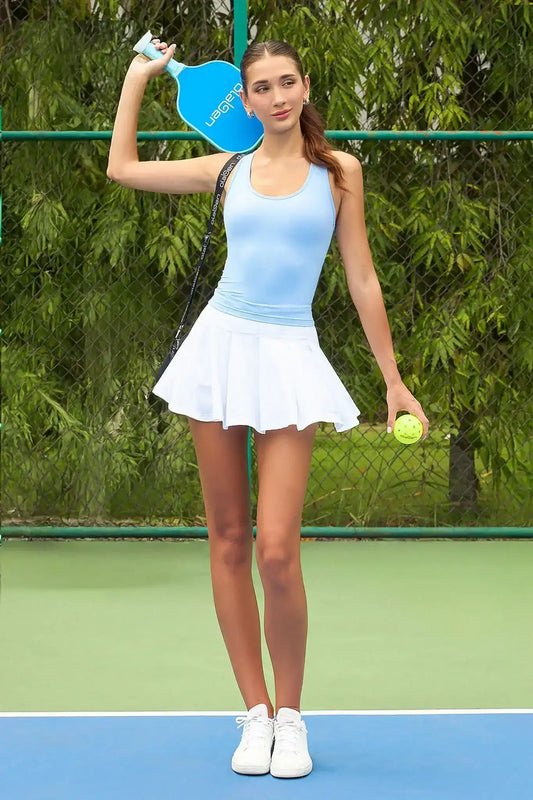
In pickleball, the “kitchen” is one of the most confusing concepts, even for players who have been on the court for years. Although the sport is known for its simple and beginner-friendly rules, the kitchen remains the one area that has puzzled millions of players since pickleball was first created in 1965.
This article will explain in detail what the kitchen is, the official pickleball kitchen rules, the most common mistakes players make, key strategies, and the misconceptions you should eliminate, so you can play with more confidence and stay fully within the rules.
What Is the Kitchen in Pickleball?
The kitchen in pickleball, officially known as the Non-Volley Zone (NVZ), is a designated 7-foot area extending from the net on both sides of the court. This is the famous “no-volley zone,” meaning players are not allowed to hit the ball out of the air (volley) while standing inside this zone or while touching any part of the NVZ line with their body, paddle, or clothing.

The kitchen includes the entire space within this 7-foot area as well as all boundary lines that define it. That means the kitchen line, sideline, and centerline connected to the NVZ are considered part of the kitchen itself. If you touch any of these lines while attempting a volley, it is treated the same as standing inside the zone, resulting in a fault.
Understanding the kitchen is essential because it shapes pickleball’s unique style of play. It prevents players from camping at the net to dominate with smashes and instead encourages softer, more strategic exchanges such as dinks. When players talk about pickleball kitchen rules, they are referring to the set of regulations governing movement, volleying restrictions, and legal play within this critical zone.
Why Does the Kitchen Exist in Pickleball?
The kitchen was intentionally designed as a defining feature of the sport. Its purpose is far more strategic than many new players realize. Without the kitchen, the game would lose much of its balance, finesse, and tactical depth.
The primary reason the kitchen exists is to prevent players from standing directly at the net and smashing every return, which would make rallies extremely short and heavily favor aggressive, physically dominant players. By restricting volleys near the net, the game becomes more skill-based rather than strength-based.

The kitchen also encourages the use of dinks, the soft, controlled shots that are central to advanced pickleball strategy. These gentle exchanges require precision, patience, and keen anticipation, helping the game become more thoughtful and less reliant on power alone. Because players must approach the net carefully and time their footwork, the kitchen forces longer rallies and promotes smart, dynamic court positioning.
Beyond gameplay strategy, the kitchen contributes to the sport’s unique rhythm and style, creating a balance between offense and defense. It pushes players to be creative, read opponents’ movements, and build points rather than relying on quick finishes.
As for its quirky name, most historians believe the term “kitchen” originated from shuffleboard, another paddle-and-disc sport that features a penalty zone with a similar function. Over time, the nickname stuck, and it has since become one of the most iconic and misunderstood terms in pickleball.
Pickleball Kitchen Rules: The Essential Guidelines
Understanding the Non-Volley Zone, or “the Kitchen”, is crucial because it shapes the rhythm, strategy, and fairness of every pickleball rally. According to the official pickleball rules, several foundational rules determine what you can and cannot do inside this seven-foot area. Many beginners overlook these details, which often leads to unnecessary faults. Below is a clear and comprehensive explanation of how the Kitchen actually works.
-
No Volleys Inside the Kitchen (Rule 9.A)
The most fundamental rule is that you cannot volley the ball while you are inside the Kitchen. A volley means striking the ball before it bounces, so the moment you attempt this motion, your position becomes critical. If any part of your body, your paddle, your clothing, or even an accessory is touching the Kitchen floor or the Kitchen line at the time you volley, it is immediately considered a fault.
This rule is strict: it doesn’t matter if the contact is accidental, barely noticeable, or unintentional. Even a slight brush of a shoe against the line invalidates the volley. Players often underestimate how sensitive this rule is, but in pickleball, the Kitchen line is treated as an extension of the zone itself, if you touch it, you are inside it.

-
Momentum Violations After a Volley (Rules 9.B & 9.C)
One of the most misunderstood situations involves momentum. Even if you start the volley outside of the Kitchen and make clean contact with the ball from a legal position, the point can still result in a fault if your momentum causes you to enter the Kitchen immediately afterward.
Momentum is interpreted very broadly. If your body continues forward and a foot steps into the zone, that is a fault. If you lose balance and your hand touches the Kitchen floor, that is also a fault. Even items that are part of you or attached to you, your paddle, your shirt, a hat that falls forward, count as extensions of your body under the rules. So, for example, a player who hits a powerful volley but stumbles forward and falls into the Kitchen has committed a fault, regardless of how spectacular the shot was. The rule remains in effect until the player has fully regained balance and control of their movement.

-
You May Enter the Kitchen to Hit a Bounced Ball (Rule 9.F)
Although the Kitchen comes with many restrictions, it is not a forbidden area. You are allowed to step into it whenever you need to, as long as the ball has already bounced before you hit it. This means you may move into the Kitchen to respond to a soft dink or a low drop shot, stay inside during a dink rally, or step out and back in as the point develops.
The main point is that the restriction applies only to volleys. Once the ball touches the ground, the Kitchen becomes just like any other part of the court. Players often move in and out of this zone constantly as part of their strategy.

-
You May Stand in the Kitchen While Your Partner Volleys (Rule 9.H)
The Kitchen rule applies solely to the player who is striking the ball. This means that in doubles, you are allowed to stand inside the Kitchen even while your partner performs a volley. Your presence inside the zone does not affect the legality of the shot unless you personally attempt to volley.
This distinction is important because many beginners mistakenly believe that both players must avoid the Kitchen at all times, which is not true. Only the actions of the player making contact with the ball matter.

-
Jumping to Volley From Inside the Kitchen Still Counts as a Fault (Rule 9.D)
Some players try to get creative by jumping inside the Kitchen and hitting the ball in mid-air, believing that suspending themselves off the ground exempts them from the rule. However, the rulebook clarifies that what matters is the last point of ground contact before the volley. If you initiated your jump from within the Kitchen, then any volley you make while airborne is considered an illegal Kitchen volley.
Even if you land safely outside the zone, the volley is still a fault because your jump originated from inside the Kitchen. The decisive factor is not where you land but where you were positioned at the moment your feet last touched the ground.

The Erne - A Legal and Advanced Attack Performed Outside the Kitchen
The Erne is one of the most exciting and technically advanced shots in pickleball. It allows a player to execute an aggressive volley right near the net without committing a Kitchen fault. Although visually dramatic, the Erne is completely legal when performed correctly and is a powerful tool for taking control of a rally.
To execute an Erne, the player anticipates a down-the-line dink or soft shot from the opponent. As the ball travels, the player quickly moves toward the sideline, then jumps or steps over the Kitchen, never touching the Non-Volley Zone, and lands outside the Kitchen line before making contact with the ball. Because the volley is struck after landing outside the NVZ, the move satisfies all Kitchen rules.
The Erne is especially effective against opponents who hit predictable or slightly high dinks along the sideline. By cutting off the ball early and volleying from an extremely close position, you dramatically reduce your opponent’s reaction time and apply immediate offensive pressure. This often leads to forced errors, weak pop-ups, or outright winners.
However, the Erne requires exceptional timing, footwork, anticipation, and spatial awareness. Misjudging the ball’s height, stepping on the Kitchen line, or contacting the ball before landing outside the NVZ results in a fault. For this reason, the Erne is typically used by more advanced players who are comfortable reading patterns, moving explosively, and maintaining precise body control.
When mastered, the Erne becomes a formidable tactical weapon, transforming neutral dink rallies into aggressive point-winning opportunities while staying fully within the rules of pickleball.
The Kitchen and Your Footwork: How to Stay Safe and Agile
Footwork is one of the most critical elements of strong Kitchen play in pickleball. Because the Non-Volley Zone demands soft hands, precise control, and quick reaction time, your movement needs to be clean, efficient, and stable. The ability to shift your weight smoothly, stay low, and maintain balance is what allows you to execute accurate dinks, defend fast exchanges, and avoid accidental faults on the Kitchen line.
When you step into the NVZ to hit a ball that has bounced, you must be ready to move in every direction, forward for a short drop, backward for a deeper dink, or laterally to maintain control during extended rallies. Good Kitchen footwork relies on short, controlled steps, a low center of gravity, and constant readiness to reset your position. Poor footwork, such as overstriding or crossing your feet, can cause you to lose balance or be pulled into the Kitchen during a volley, resulting in an immediate fault.
Comfortable sportswear also supports better movement and stability. Lightweight, breathable, stretch-ready clothing such as croptops and dresses, helps you move freely as you bend low, recover quickly, or shift laterally during fast NVZ exchanges. Simple accessories such as moisture-wicking headbands or a good paddle can also make a difference, helping you maintain a secure grip and stable control through long rallies.
Ultimately, strong footwork in the Kitchen is about balance, precision, and efficient movement. By staying grounded, moving with purpose, and maintaining full control over your body positioning, you can navigate the NVZ confidently and elevate your overall pickleball performance.

Final Thoughts: Mastering the Kitchen to Become a Better Player
Mastering the Kitchen goes far beyond memorizing a list of rules, it’s about understanding how the Non-Volley Zone shapes every tactical decision you make on the court. The NVZ is where finesse outperforms force, where patience becomes a weapon, and where the smallest footwork mistake can cost an entire point. When you learn how to manage your positioning around the Kitchen line, when to advance, when to retreat, and how to reset under pressure, your entire approach to pickleball evolves.
The Kitchen exists to create balance in the game, encouraging thoughtful shot selection instead of reckless power play. It forces players to develop touch, timing, and body control. As you become more comfortable navigating this space, you’ll find yourself constructing points with intention, setting up dinks, anticipating counterattacks, and controlling the pace instead of reacting to it. Understanding the NVZ ultimately teaches you how to slow the game down mentally even when the rally becomes fast and chaotic.
Moreover, feeling comfortable and stable enables you to focus fully on strategy rather than worrying about your gear. Therefore, you may check out pieces from women’s pickleball apparel and men’s pickleball collections of Olaben that allow you to move efficiently, maintain balance near the line, and avoid accidental foot or fabric contact.
In the end, if you understand the Kitchen, you understand pickleball. The NVZ is the heart of the sport, and mastering it is the difference between simply playing and truly competing. Once you become confident at the line, reading plays, controlling momentum, and moving with precision, you elevate your game far beyond the basics and step into the realm of thoughtful, high-level play.