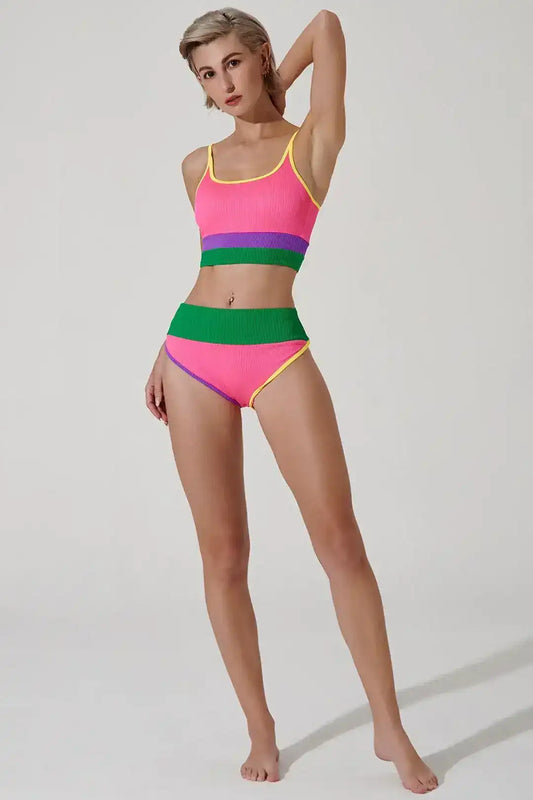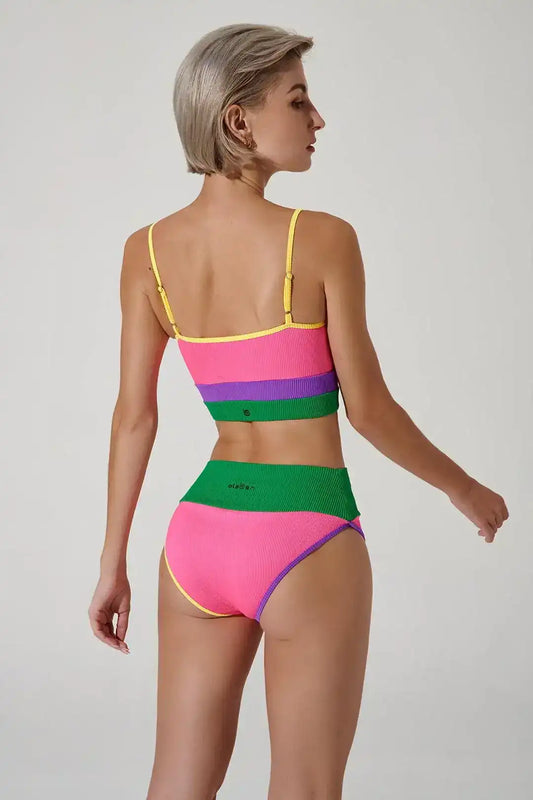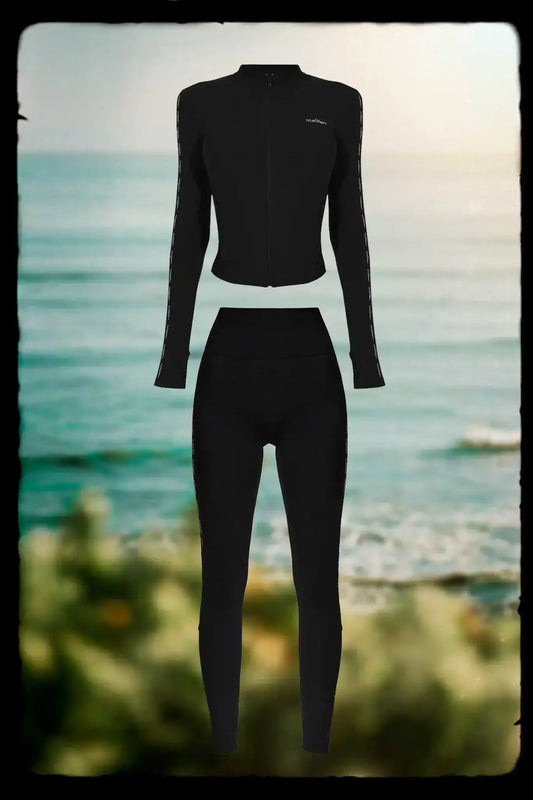
Yes, you can swim in a sports bra, tank top, or gym clothes in a pinch, but it is not ideal. Chlorine and salt water break down the elastane in activewear, cotton soaks up water until it turns heavy and see-through, and none of it gives you real swim support. Fine for a quick dip, not for regular swimming.
Why Activewear Is Not Made for Swimming
Gym clothes and swimwear look similar, but they solve different problems. Activewear is built to move sweat away from your skin into the air. Swimwear is built to sit in water, shed it fast, and survive chemicals. Wear one in the other’s environment and the gaps show up quickly.
Here is what tends to go wrong when you swim in workout clothes:
- Absorbency and weight. Cotton and cotton blends hold water instead of releasing it. A dry tank that weighs a few ounces can double or triple in weight once it is soaked, which drags on every stroke.
- Drag. Loose gym tops, seams, and baggy shorts create resistance in water. Real swimwear is cut close and flat-seamed for a reason.
- Chafing. Wet cotton seams rub. A short swim is fine, but repeated laps in a soaked sports bra or tank can leave you raw under the arms and along the band.
- Sagging and see-through fabric. Water loosens the fibers. Light-colored cotton turns sheer when wet, and knit gym fabric stretches out and stays baggy.
- Chlorine damage to spandex. This is the big one. Elastane (spandex or Lycra) is what gives leggings and bras their stretch, and chlorine attacks it. Pool water degrades the fibers over time, so your favorite bra loses its snap and starts to bag out. Dedicated swimwear uses more chlorine-resistant fibers like polyester or PBT for exactly this reason.

A sports bra is a good example. It is designed to control bounce during a run, not to dry fast or resist chlorine. For more on where a sports bra actually belongs, see our guide on whether sports bras can be worn every day and the difference between a sports bra and a crop top.
What Happens to Each Fabric in Water
Not all gym clothes react the same way. The fiber makes the difference. Here is how the four common activewear materials behave once they get wet, using standard moisture regain figures (the percentage of water a fiber holds relative to its dry weight).
|
Fabric |
In water |
Chlorine / salt |
Swim verdict |
|
Cotton |
Soaks heavily (about 7% to 8% moisture regain), gets heavy, sags, turns see-through |
Not chemically damaged, but stays wet and cold for a long time |
Worst choice for swimming |
|
Polyester |
Low absorbency (about 0.4% moisture regain), dries fast, keeps its shape |
Most chlorine-resistant of the common fibers |
Best of the gym fabrics for a dip |
|
Nylon / Polyamide |
Moderate absorbency (about 4% moisture regain), more drag when wet, dries slower than polyester |
Holds up better than spandex but salt and sun weaken it over time |
Okay short term, common in real swimwear when blended |
|
Spandex / Elastane |
Little absorbency itself, but stretches out when saturated |
Chlorine breaks it down fastest, causing bagging and lost stretch |
Fine occasionally, ruined by regular pool use |
The takeaway: a polyester or nylon tank handles a quick swim far better than a cotton one, but any garment with a lot of spandex will pay for repeated pool visits. If you want the full breakdown, read our comparison of activewear fabrics: polyester, nylon, spandex, and recycled and the best fabrics for sport tank tops.

When Swimming in Gym Clothes Is Actually Fine
It is not always a no. There are plenty of situations where a sports bra, tank, or leggings work perfectly well in water:
- A quick dip or one-time swim. On vacation with no swimsuit? A polyester sports bra and shorts will get you in the water. Just rinse them after.
- Aqua aerobics and water fitness. Low-impact classes where you are not doing hard laps are a comfortable fit for supportive gym wear, and many people prefer the extra coverage.
- Modesty or coverage. A tank top or leggings over a swimsuit adds sun protection and coverage. Layering activewear on top of proper swimwear is common and totally fine.
- Cold-water or lake swims. A fitted synthetic top can add a thin layer of warmth for a short open-water dip.
The rule of thumb: occasional is fine, routine is not. If you swim more than a few times a season, the chlorine math catches up with your gym wardrobe. Not sure what counts as a tank top versus a swim top? Our guide to tank tops breaks down the cuts.

What to Wear Instead, and How to Care for Wet Activewear
If you swim regularly, the simplest answer is real swimwear. Look for suits made mostly of polyester or a nylon-elastane blend labeled chlorine-resistant. They dry fast, hold their shape, and shrug off pool chemicals in a way gym clothes never will. Olaben’s women’s swimming collection is built for exactly this, with pieces you can also layer under or over activewear for the pool deck.
If your gym clothes do end up wet, whether from a swim, sweat, or rain, a little care buys back a lot of their life:
- Rinse in cool fresh water right away. This flushes out chlorine and salt before they sit and eat at the fibers. Do it at the pool if you can.
- Skip the fabric softener. It coats technical fabric and kills the moisture-wicking finish.
- Wash cool, on gentle. Hot water accelerates elastane breakdown. Turn pieces inside out and use a mesh bag for bras.
- Air dry, never tumble dry hot. Heat is the fastest way to destroy stretch. Lay flat or hang in the shade, out of direct sun.
- Do not wring or twist. Press the water out gently to protect the shape and the elastic.
Treat a soaked sports bra like the technical garment it is and it will last. Treat the pool like your gym and it will not.

Frequently Asked Questions
Can you swim in a sports bra?
Yes, for a quick dip, especially a polyester one. But a sports bra is built for bounce control, not water, so it does not dry fast or resist chlorine. Repeated pool swims will stretch it out and break down the elastane.
Does chlorine ruin gym clothes?
Over time, yes. Chlorine slowly degrades the elastane (spandex) that gives activewear its stretch, so pieces start to sag and lose their snap. Rinsing in fresh water right after swimming and washing cool helps, but regular pool use will still wear them out faster than swimwear.
Can you swim in a cotton tank top?
You can, but it is the worst fabric for it. Cotton soaks up a lot of water, so it turns heavy, sags, and often becomes see-through when wet. It also stays cold and takes a long time to dry. A synthetic tank is a much better choice.
Are leggings okay to swim in?
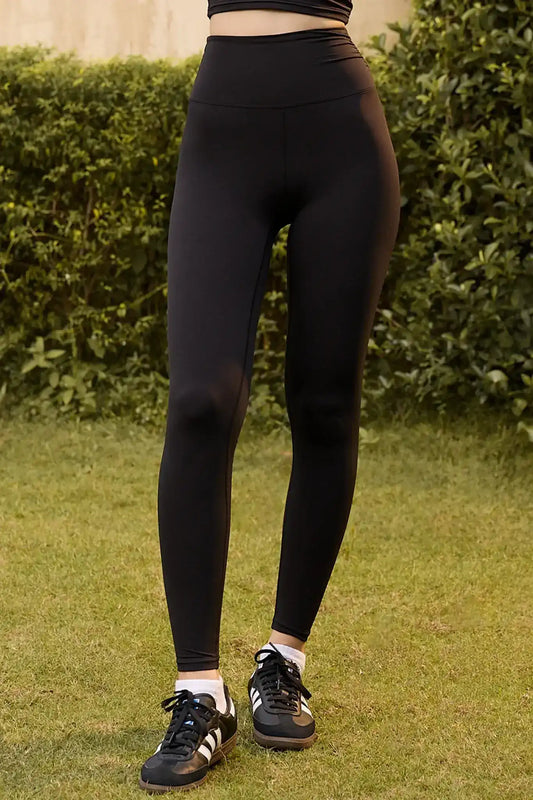
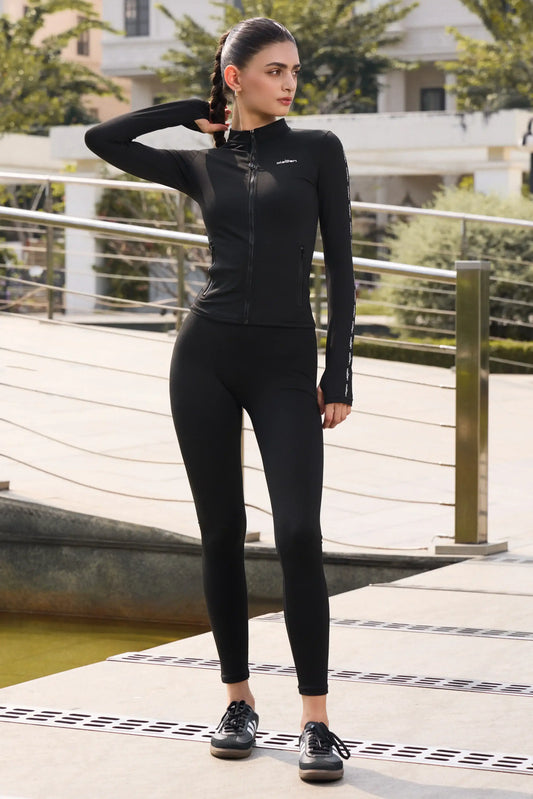
Fitted synthetic leggings work fine for aqua aerobics, sun coverage, or a short cold-water swim, and many people wear them over a swimsuit. Just avoid making the pool a regular habit for them, since chlorine will shorten their life.
What is the difference between swimwear and activewear fabric?
Both use synthetics, but swimwear leans on chlorine-resistant fibers like polyester and PBT, is cut close to reduce drag, and dries fast. Activewear is built to wick sweat into the air and often carries more spandex, which chlorine attacks. That is the core reason gym clothes struggle as swimwear.