What is Pilates? The Benefits Pilates Brings to Practitioners

Table of Contents

In today’s world of health and fitness, trends may change constantly, but there are still practices that prove their lasting value over time. One of them is Pilates. So, what exactly is Pilates that attracts such a wide audience and keeps growing in popularity? Many people think of Pilates as simply an exercise program, but in reality, it is a lifestyle that enhances both physical and mental health.

In this article, Olaben will take you on a journey into the world of Pilates: from its basic concepts and history to the outstanding benefits this method brings.

What is Pilates?

Pilates is a training method that combines body movement with mindful concentration to improve strength, flexibility of the joints, and the surrounding muscle groups. Through this, practitioners not only enhance control over their movements but also deepen focus and muscle awareness with every exercise.

One of the key highlights of Pilates is its focus on building Core strength, the group of muscles located at the body’s center, including the abdominals, hips, and lower back. The core not only supports balance and posture but also serves as the foundation for all daily movements.

What are the fundamental principles of Pilates?

To begin practicing Pilates, you need to master some basic principles:

  • Engage your Core: always maintain control through your core muscles.
  • Absolute focus: concentrate on each movement to achieve maximum results.
  • Proper breathing: inhale through the nose, exhale through the mouth.
  • Controlled movement: combine breathing rhythm with precise technique in every exercise.

Depending on the routine, you can practice Pilates on specialized equipment or simply perform basic Pilates exercises on a mat.

Pilates enthusiast practicing a variety of exercises for a healthy lifestyle

How is Pilates different from yoga?

Pilates and yoga are both low-impact, mindful practices that encourage controlled breathing and a strong mind-body connection. They share several benefits, but the way they approach movement and what they aim to achieve are quite different.

Pilates is centered around precise, controlled movements that emphasize alignment, stability and deep core engagement. The goal is to build strength, improve posture and help the body move efficiently.

Yoga focuses on flexibility, balance and overall strength, often paired with breathing techniques, relaxation and meditation. It’s designed not only to support physical health but also to cultivate calm and mental clarity.

Pilates can be practiced on a mat, but it also includes equipment like the Reformer or Cadillac to increase support or challenge.

Yoga, in contrast, is almost always practiced using only your body weight.

Pilates is a relatively modern method, developed about a century ago with a clear set of principles. Yoga is an ancient practice with roots in Indian philosophy and spirituality.

Breathing also differs between the two. Pilates uses three-dimensional breathing, where the rib cage expands in all directions to support efficient movement and oxygen flow. In yoga, pranayama breathing aims to purify the body, sharpen focus and support healing.

In short, Pilates is strength and alignment driven, while yoga leans more toward flexibility, balance and mindfulness. Both complement each other beautifully, depending on what your body needs.

Who is Pilates for?

Pilates is a truly adaptable form of movement, which is why it works for almost everyone. Whether you’re a complete beginner, someone who works out regularly, an athlete, a senior, a child, recovering from an injury, pregnant or postpartum, or living with a disability, Pilates can be tailored to fit your body and your goals.

With thousands of variations and plenty of equipment options to scale exercises up or down, every session can be adjusted to match your strength, mobility and comfort level. That makes Pilates a safe, accessible and effective practice for all ages and abilities.

Pilates is built on biomechanics, the science behind how and why our bodies move. It applies principles of motion, force and momentum, and each exercise can be progressed or regressed to fit your needs. Beyond basic mechanics, Pilates also considers how muscles and fascia work together to create smooth, efficient movement.

Because it trains the entire body, improving strength, flexibility, endurance and overall movement quality, Pilates pairs well with almost any activity. Dancers, runners, cyclists, golfers, football players and hockey players often use it to boost mobility, agility and performance.

Its emphasis on controlled breathing, body awareness and the mind-body connection also makes Pilates a great choice for stress relief. Many people turn to it while recovering from injuries, dealing with chronic pain or trying to prevent future injuries.

A Pilates workout isn’t about hitting a certain number of reps. It’s about moving with intention, building functional strength that supports your everyday activities and helping your body work as efficiently as possible.

Discover the transformative power of Pilates

The Origins of Pilates

Pilates was created by Joseph Pilates in the early 1920s. At first, it was designed as a rehabilitation method for dancers. With their intense training schedules often 6 days a week, for several hours a day, dancers were highly prone to injuries caused by repetitive movements targeting the same muscle groups.

Pilates emerged as a way to rebalance the body, helping overworked muscles relax and recover while strengthening and improving flexibility.

Today, Pilates has gone far beyond the world of dancers to become a favorite of many celebrities and public figures. Beyond sculpting a toned physique, Pilates also helps shape elegant, well-defined curves that are both soft and captivating.

How many types of Pilates are there?

Today, Pilates is generally divided into two main forms:

  • Mat Pilates: A simple and accessible way to practice, suitable for both beginners and experienced practitioners.
  • Equipment-based Pilates: Uses specially designed apparatus to provide support and increase the challenge of each exercise.

Pilates equipment also comes in a variety of sizes. In professional studios, you may find larger machines such as the Cadillac or the Reformer. For smaller spaces or home workouts, practitioners can opt for compact tools like dumbbells, resistance bands, stability balls, foam rollers, Pilates rings, tennis balls, or therapy balls.

Read more: What is Wall Pilates? 8 Effective Wall Pilates Exercises

Enhancing Flexibility and Balance

What are the benefits of Pilates?

Besides promoting a healthier body and improving posture, what are the benefits of Pilates? This practice offers much more than you think: boosting energy, supporting weight management, and most importantly, being highly adaptable to personal needs. Whether you are a beginner or at an advanced level, Pilates helps you achieve a toned, flexible, and graceful physique.

Some of the key benefits of Pilates include:

  • Better, deeper sleep.
  • Enhanced body awareness and control.
  • Developing both muscular strength and flexibility, along with mental resilience.
  • Making everyday movements easier and more effective.
  • Improved posture, bringing greater confidence and a positive mindset.
  • Stress relief, easing menstrual pain, and improving sexual well-being.
  • Increased range of motion after injury recovery, with excellent support for many other sports.

A study published on ResearchGate also revealed that Pilates is highly effective in reducing chronic lower back pain while preventing injuries and supporting functional recovery.

Building Strength and Endurance

Frequently Asked Questions about Pilates

Which muscles does Pilates target?

Pilates emphasizes the core muscles, including the abdominals, hips, spine, and pelvis. It also strengthens the legs, thighs, and glutes, making it highly beneficial for people with lower back pain or arthritis.

Does Pilates help with weight loss?

Yes, but indirectly. Pilates tones, sculpts, and improves body shape, though it is not a high-calorie-burning workout. For effective weight loss, it should be combined with a healthy diet and cardio exercises such as walking, swimming, or cycling.

What’s the difference between Yoga and Pilates?

Both emphasize the connection between body and mind. However, yoga focuses more on spirituality and meditation, while Pilates emphasizes physical conditioning, core strength, and posture improvement.

Who should avoid Pilates?

Those with unstable blood pressure, severe osteoporosis, risk of blood clots, or undergoing treatment for herniated discs should consult their doctor before practicing.

Incorporating Pilates into Your Daily Routine

Explore the world of Pilates with Olaben

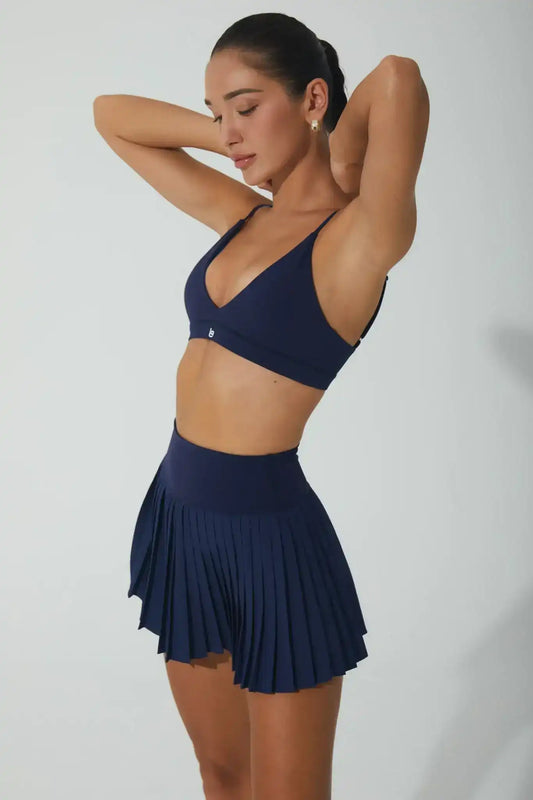
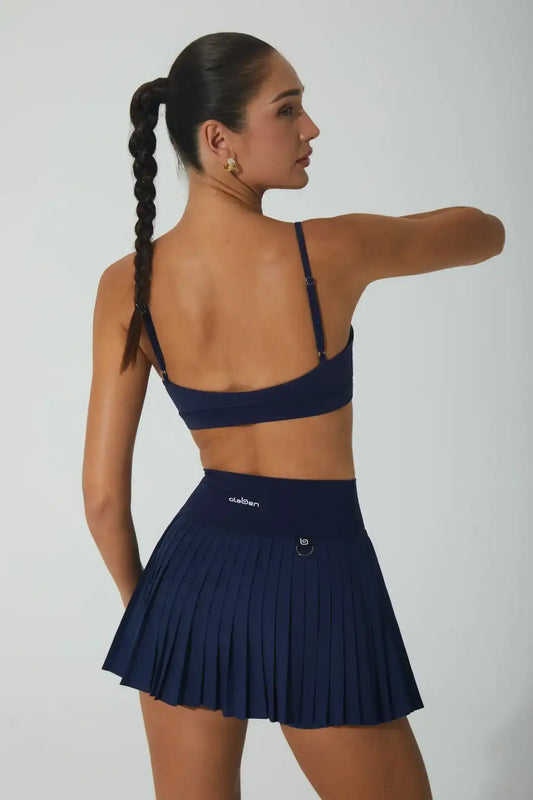
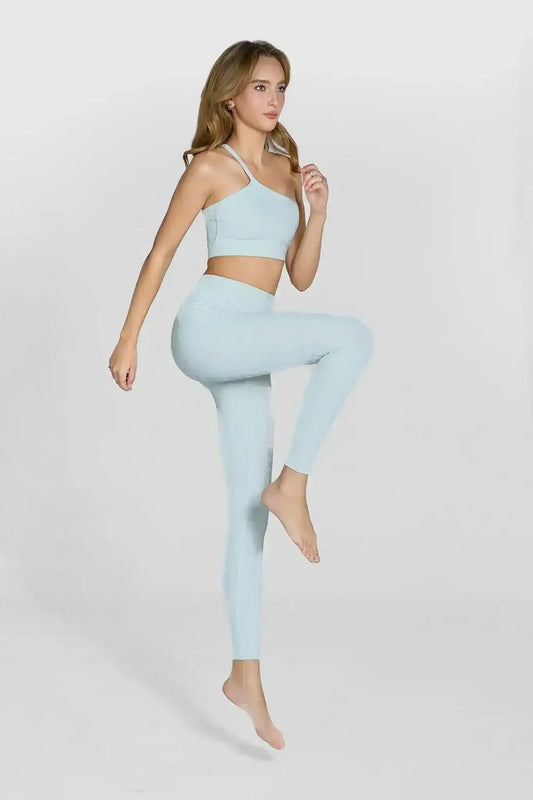
To make your Pilates journey more effective and fulfilling, choosing the right outfits and accessories plays a key role. As a premium activewear brand, Olaben offers everything you needfrom leggings, sports bras, crop tops, tank tops, long sleeves, jackets to hoodies.

Beyond clothing, Olaben also provides a wide range of Pilates workout essentials such as yoga mats, balls and fitness accessories, water bottles, gym bags, and sports socks. These companions help you move with confidence and maintain an active lifestyle every day.

If you enjoy other sports besides Pilates, Olaben also offers exclusive collections for yoga, tennis, pickleball, golf, and running. Whatever your activity, Olaben is ready to accompany you in achieving your goals while keeping your style on point.

Back to blog