In pickleball, the dink is not a power shot, yet it is one of the most strategic and game-defining techniques, especially during close-net exchanges. A well-executed dink allows you to control the pace of play, minimize unforced errors, and force your opponent into a defensive position. In this article, Olaben presents a complete guide to pickleball dinking, from fundamental principles to advanced applications, including proper technique, optimal timing, common variations, and practical tips to help you dink more effectively in competitive play.
What Is a Pickleball Dink, and Why Is It So Important?
In pickleball, a dink is a soft shot that gently clears the net and lands precisely in the opponent’s Non-Volley Zone (the Kitchen). Rather than relying on power, this technique emphasizes precision, touch, and ball control, with the goal of keeping the ball low and limiting your opponent’s ability to attack aggressively.
Pickleball dinking is not limited to a single execution style. It encompasses a variety of forms, such as the forehand dink, backhand dink, two-handed backhand dink, and deceptive or “fake” dinks. Each variation is suited to specific ball trajectories, court positions, and tactical situations, allowing players to adapt fluidly during fast exchanges at the net.

What truly sets the dink apart is its ability to regulate the tempo of the game. When used at the right moment, a dink can slow the rally, disrupt an opponent’s power-based rhythm, and force them into awkward or low-percentage returns. This creates the strategic foundation for gaining control of the rally or setting up a counterattack.
At more advanced levels, the dink evolves beyond a purely defensive shot. A well-placed dink with a low trajectory and precise landing spot, can apply constant pressure, provoke errors, or induce a weak, high return that opens the door to finishing the point. For this reason, the pickleball dink technique is widely regarded as a fundamental skill for enhancing control and competitive effectiveness, particularly in doubles play.
Common Pickleball Dink Techniques
Forehand Dink Technique in Pickleball
The forehand dink is the most commonly used technique when playing close to the net. It allows players to maintain excellent ball control and stay proactive during soft exchanges at the kitchen line. To execute an effective forehand dink, attention must be paid to every detail, from the ready position to the moment the pickleball paddle contacts the ball.

Preparation Stance
- Grip: Hold the paddle with a neutral grip, keeping your hand relaxed to allow precise control of the paddle face. Slightly separating the index finger from the other fingers can enhance feel and touch, while gripping too tightly may cause the shot to become stiff and uncontrolled.
- Stance: Lower your center of gravity by bending your knees slightly. Keep your feet shoulder-width apart to maintain balance. Stay relaxed and position yourself close to the Non-Volley Zone line so you are ready to handle short balls efficiently.
See also: How to Hold a Pickleball Paddle Correctly for Beginners
How to Execute a Forehand Dink
- Step 1: Open the paddle face slightly and move the paddle in a smooth, controlled motion from low to high. Avoid excessive wrist action.
- Step 2: Make contact with the ball using a fluid arm swing, combined with a gentle knee bend to generate just enough lift. The goal is for the ball to clear the net with a low trajectory and land softly in your opponent’s kitchen.
Key Tips
- If the ball lands deeper than intended, adjust by taking a small step forward rather than increasing arm force.
- Prioritize control and consistency over speed. A quality forehand dink is safe, low, and difficult for your opponent to attack directly.
Backhand Dink Technique in Pickleball
The backhand dink is an essential skill for handling balls directed to the non-dominant side near the net. Compared to the forehand, the backhand dink requires more precise paddle-face control and footwork to keep the ball low and stable.

Preparation Stance
- Maintain a stance similar to the forehand dink: low center of gravity, slightly bent knees, and a relaxed upper body.
- Stand close to the Non-Volley Zone line to better manage distance and shot angles.
- Hold the paddle in front of your body, ready to rotate to the backhand side as the ball approaches.
How to Execute a Backhand Dink
- Step 1: Rotate your torso slightly to the left while tilting the paddle face marginally downward to control the ball’s trajectory. Move the paddle calmly toward the backhand side.
- Step 2: Step one foot forward to establish balance, then guide the paddle forward with a smooth arm motion. Gradually reduce force and finish the stroke with the paddle stopping just in front of your body.
Key Tips
- If the ball drops in front of you, take a small step forward to make contact at an optimal point.
- If the ball lands deeper, step back slightly with your left foot to maintain balance.
- Avoid taking too many steps during a single exchange, as this can reduce control and increase the risk of injury.
Two-Handed Backhand Dink Technique in Pickleball
The two-handed backhand dink is an effective option for enhancing stability during extended dink rallies while maintaining control in close-net exchanges. Using both hands provides greater paddle-face stability, reduces hand vibration, and allows for more precise directional control, especially in challenging situations.

Preparation Stance
- Grip: One hand holds the paddle handle as usual, while the other supports the throat or shaft of the paddle for added control. Keep your fingers relaxed and avoid gripping too tightly, as excessive tension can cause the paddle face to open during contact.
- Stance: Lower your center of gravity with feet shoulder-width apart to maintain balance. Position yourself close to the Kitchen (Non-Volley Zone) line and stay light on your feet, ready to move with the ball.
How to Execute a Two-Handed Backhand Dink
- Step 1: Move your feet to align with the ball, rotating your torso sideways to create a comfortable hitting angle. Point both toes toward the target area to improve accuracy and control the landing spot.
- Step 2: Use gentle lift generated from the shoulders and arms to glide the paddle through the ball, keeping the wrists stable. The ball should clear the net on a low trajectory and land softly in your opponent’s Non-Volley Zone.
Key Tips
- Always keep your center of gravity low to contact the ball at an optimal height; standing too upright reduces control.
- Move your feet into position first, then rotate your body and execute the shot—avoid hitting before you are properly set.
- Minimize wrist action, as excessive wrist use can cause the ball to pop up and become difficult to control.
- Keep your arms relatively straight during contact; excessive elbow bend may send the ball too deep or too fast.
- Avoid a high follow-through after contact, as a higher ball trajectory gives your opponent an opportunity to counterattack.
The “Fake” Dink Technique in Pickleball
Beyond standard dinks, the fake dink is a deceptive technique designed to mislead opponents when conventional dinking no longer creates attacking opportunities. By disguising intent, this shot disrupts the opponent’s timing and positioning, often forcing errors.

Preparation Stance
- Grip: Use a neutral grip (often referred to as grip #2), with the index finger slightly separated to enhance touch and feel. Keep both your hand and paddle head relaxed; avoid squeezing the handle, which can unintentionally open the paddle face.
- Body Position: Lower your center of gravity with slightly bent knees. Keep your feet shoulder-width apart or slightly wider and your body relaxed. Stand close to the Non-Volley Zone line to enable quick reactions.
How to Execute the Fake Dink
- Step 1: As the ball approaches, initiate a swing that resembles a power shot (forehand or backhand). Instead of striking firmly, soften the motion at contact and execute a gentle dink. This visual deception makes it difficult for your opponent to read the shot.
- Step 2: If the opponent reacts incorrectly or hesitates, capitalize immediately with a direct attacking shot or a well-timed volley to gain the upper hand and finish the point.
Key Tips
- This technique requires finesse and good rhythm; avoid overusing it, as predictability reduces its effectiveness.
- Combine fake dinks with standard dinks to maximize the element of surprise.
- Maintain a stable body position and avoid excessive swing force, focus on creating the illusion of a change in shot direction rather than actual power.
When mastered, both the two-handed backhand dink and the fake dink add sophistication and tactical depth to your net game, making you far more unpredictable and effective in competitive pickleball.
Long Dink Technique in Pickleball
The long dink is one of the most important dink variations in pickleball and is commonly used in two key situations: when you are under pressure and need to retreat toward the baseline for defense, and when you are transitioning from the baseline toward the Non-Volley Zone to maintain pressure and control the rally.

Preparation Stance
- Grip: Use a neutral grip (grip #2), with the index finger slightly separated to enhance touch and feel. Keep your hand and paddle head relaxed; avoid squeezing the handle, as this may cause the paddle face to open excessively.
- Body Position: Lower your center of gravity with slightly bent knees. Keep your feet shoulder-width apart or slightly wider, and stay relaxed. Position yourself near the middle of the court to allow smooth movement and easy trajectory adjustment.
How to Execute a Long Dink
- Step 1: Slightly open the paddle face and move the paddle downward in a slow, controlled motion. Keep your eyes on the ball and maintain a stable wrist, avoid flicking or snapping the wrist.
- Step 2: Use a smooth arm motion combined with a gentle knee bend to lift the ball over the net, aiming for a soft landing in your opponent’s Non-Volley Zone.
Key Tips
- If the ball travels slightly too far, take a small step forward while keeping the same arm motion to adjust the trajectory.
- Prioritize control and consistency over power. Generate lift from the arm and shoulder rather than force, ensuring a low, accurate shot that is difficult for your opponent to counterattack.
How to Handle and Neutralize an Opponent’s Dink
In pickleball, responding correctly to an opponent’s dink is crucial for maintaining control and creating attacking opportunities. Below are two common scenarios: a high dink and a low (dead) dink.

When the Opponent Hits a High Dink
A high dink typically occurs when your opponent lifts the ball too much, creating a clear attacking opportunity.
Preparation Stance
- Grip: Use a neutral grip (grip #2), with the index finger slightly separated for better feel. Keep your hand and paddle relaxed; avoid over-gripping.
- Body Position: Lower your center of gravity with lightly bent knees. Keep your feet shoulder-width apart or slightly wider, and stand close to the Non-Volley Zone line, ready to react quickly.
How to Respond
- Lean your body toward the ball and extend your paddle arm forward, keeping the paddle face slightly closed and angled downward toward the court.
- When the opponent’s shot floats or rises too high, seize the moment with a quick, direct attacking shot either forehand or backhand leaving them little time to recover.
Key Tips
- Keep the paddle in front of your body to intercept the ball early; do not stand still and wait.
- Maintain a downward paddle angle to control direction and prevent the ball from drifting wide.
- Even if the ball travels slightly long near the Non-Volley Zone, the opponent will struggle to counterattack due to the close net position.
When the Opponent Hits a Low (Dead) Dink
A dead dink lands very close to the Non-Volley Zone line and requires finesse and precise control to avoid losing the point.
Preparation Stance
- Grip: Maintain a neutral grip (grip #2), with a slightly separated index finger and a relaxed hold for better maneuverability.
- Body Position: Lower your center of gravity, keep your feet shoulder-width apart, and stay close to the Non-Volley Zone line.
How to Respond
- Lower the paddle to a horizontal position, keeping the paddle face square to the court surface and parallel to the Kitchen line.
- As the ball approaches, gently scoop or guide it back with a soft touch, allowing it to clear the net on a low trajectory and remain difficult to attack.
Key Tips
- Avoid tilting the paddle face too far downward, as this may cause the ball to pop up and give your opponent an attacking chance.
- Keep the paddle steady and level to control the ball’s path, reduce errors, and maintain the upper hand in the rally.
See also: Essential Pickleball Techniques – From Fundamentals to Advanced Play
When Should You Use the Pickleball Dink Technique?
For a dink to deliver its full strategic value, it must be used at the right moment rather than applied mechanically. Below are the most common situations in which the pickleball dink proves especially effective.
When Your Opponent Is Positioned Deep at the Baseline
If your opponent has not yet moved up to the net, a short, low dink forces them to rush forward to retrieve the ball. This sudden change in distance often disrupts their balance, leads to imprecise returns, and causes them to lose positional advantage within the rally.
When You Want to Disrupt Your Opponent’s Defensive Positioning
The dink is an ideal tool for pulling opponents out of their preferred positions. Well-placed dinks directed toward the corners or just over the net compel continuous movement, exposing open spaces on the court and creating opportunities to attack on the next shot.
When You Need to Relieve Pressure and Reset Defensively
In situations where you are being pressured by powerful shots, dinking helps slow the pace of play. A consistent, low dink limits your opponent’s ability to attack aggressively, allowing you to regain control of the rally and restore composure.
When You Want to Set Up an Attacking Opportunity
The dink is not purely a defensive shot, it is often the foundation of an effective attack. A sustained dink exchange can force your opponent into a high return or an unforced error, opening the door for a decisive volley or smash to finish the point.
Conclusion
In pickleball, the dink is not about power, but about strategy, control, and precision. A well-executed dink allows players to dictate the tempo of the game, reduce unforced errors, and place opponents in defensive positions. When mastered, the dink becomes more than a safety shot, it evolves into a subtle yet powerful weapon that creates unexpected attacking opportunities, especially during close-net exchanges.
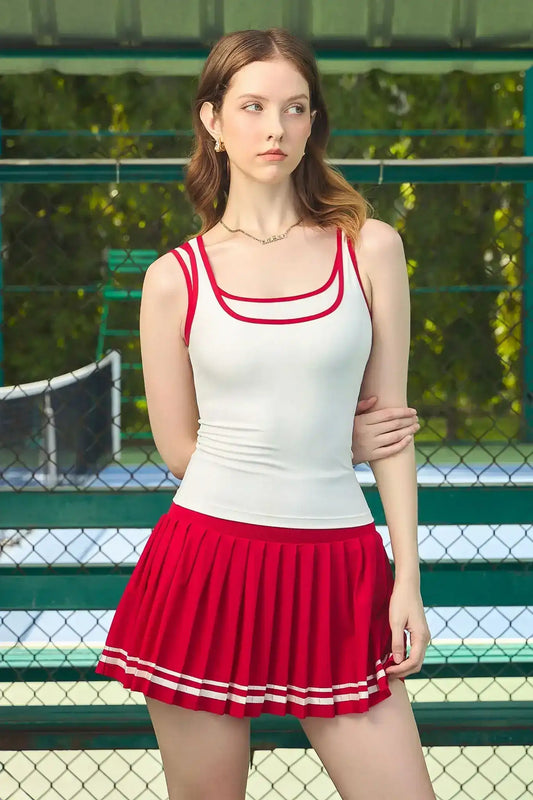
Beyond technique, appropriate apparel and accessories also play a vital role in the overall pickleball experience. Comfortable, breathable, and moisture-wicking clothing enhances mobility and performance throughout every rally. Olaben offers thoughtfully designed collections, including:
- Men’s pickleball apparel: performance athletic tops paired with shorts or long pants
- Women’s pickleball apparel: athletic tops combined with skirts or pickleball dresses
Accessories such as sports bags, headbands, socks, caps, and personal water bottles from Olaben are not only practical but also help maintain a polished, professional athletic style from the very first match.
By combining refined dink technique with the right apparel and accessories, players can elevate their on-court performance, gain greater control of the game, and enjoy pickleball to its fullest.