Pickleball paddle materials directly affect your hitting feel, control, and overall comfort during play. Each material offers a different experience, influencing power, spin, and vibration dampening. In this article, Olaben helps you understand the characteristics of each material so you can select a paddle that matches your skill level, playing style, and long-term commitment to Pickleball.
What Are Pickleball Paddles Made Of?
Compared to other racket sports, Pickleball paddles have quite unique features. They are more compact than tennis rackets, allowing players to maneuver quickly, react faster, and control the ball better within the smaller court space. Pickleball paddles are also relatively lightweight, which reduces hand fatigue during long play sessions. In addition, the paddle face is usually wide and flat, providing a larger contact area with the ball, enhancing accuracy and stability with every shot.
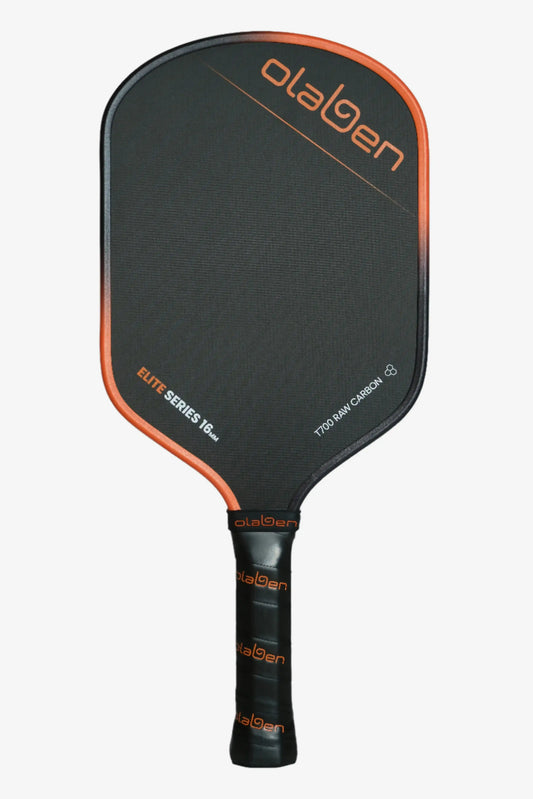
Structurally, Pickleball paddles are designed to be simple yet effective, consisting of three main components: the handle, the frame, and the paddle face.
- The handle is the grip portion, often wrapped with anti-slip material, providing a secure and comfortable hold during play.
- The frame supports the overall structure, ensuring rigidity and stability when hitting the ball.
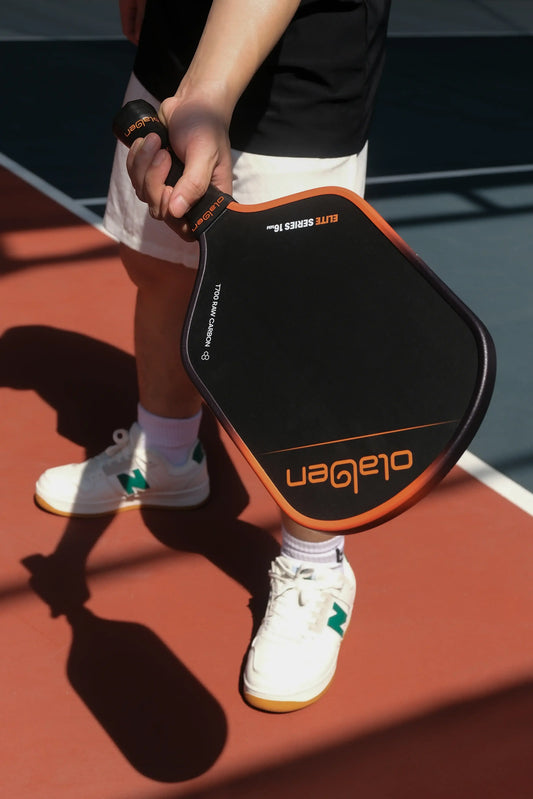
- The paddle face is the most critical part, typically made from materials such as graphite, carbon fiber, fiberglass, or composite. This directly affects power, control, and ball feel.
It is the harmonious combination of construction and material that creates Pickleball paddles suitable for various skill levels and playing styles.

Common Pickleball Paddle Face Materials Today
The paddle face is the part that directly contacts the ball, so its material greatly affects hitting power, control, and overall playing feel. Below are the most commonly used Pickleball paddle face materials today, each providing a distinct experience for players.
Graphite
Graphite is a premium material often used on top pickleballs paddles designed for control. Thanks to its thin, lightweight, and stiff properties, graphite paddle faces provide a clear ball contact feel, quick response, and high accuracy.
Players can easily adjust ball direction, making it especially effective for technical shots such as dinks or placing the ball close to the net. However, due to complex manufacturing processes and high-quality materials, graphite paddles usually come at a higher price compared to standard paddle faces.
Carbon Fiber
Carbon fiber can be considered an upgraded version of graphite, notable for its higher durability and stability. This material offers a solid hitting feel, effectively reduces vibration, and helps players maintain consistency with each shot, even at high ball speeds.
Due to its stiffness, carbon fiber paddles are particularly suitable for skilled players with a control-oriented style. However, the hitting feel is quite “firm,” and beginners may need time to get accustomed to it.
Fiberglass
Fiberglass is popular among many players for its ability to generate power while offering a softer hitting feel. Fiberglass paddle faces have high elasticity, allowing the ball to travel deeper and faster without requiring excessive hand force. This makes fiberglass a beginner-friendly option or a good choice for players with an aggressive, attacking style.
On the downside, the durability and control of fiberglass are generally lower than graphite or carbon fiber, especially with long-term use.
Composite
Composite is a material group made by combining various substances such as fiberglass, synthetic resin, or reinforced fibers. This blend allows composite paddle faces to provide a balanced playing feel, delivering stable power while maintaining adequate control.
Composite paddles come in a wide price range, suitable for players of all levels. However, compared to premium materials like graphite or carbon fiber, composites may be slightly heavier and offer less crisp feedback.

Common Pickleball Paddle Core Materials
While the paddle face determines ball contact feel, the core plays a crucial role in absorbing impact, reducing vibration, and providing stability during play. Depending on the core material, each paddle delivers a different experience, from soft and controllable to strong and decisive hits.
Polymer
Polymer cores, often made from honeycomb polypropylene (PP), are the most widely used on the market today. The main advantages of polymer are lightweight construction, excellent shock absorption, and a soft, comfortable hitting feel that significantly reduces vibration.
Thanks to its stability and ease of control, polymer cores are ideal for beginners, recreational players, or those prioritizing comfort during long sessions. However, compared to stiffer cores, polymer does not produce maximum hitting power, which may not fully satisfy aggressive, attack-oriented players.
Nomex
Nomex cores date back to the early days of Pickleball, known for their stiff honeycomb structure and high responsiveness. This material provides a solid hitting feel, with fast, powerful ball speed, making it suitable for skilled players and aggressive, decisive play styles.
On the flip side, Nomex cores tend to produce louder impact sounds and a “firm” hitting feel, which may not suit beginners or players who prefer a softer touch. Additionally, paddles with Nomex cores are generally more expensive than those with polymer.
Aluminum
Aluminum cores use a honeycomb aluminum structure, offering high stability and good ball control. These cores typically deliver precise hitting, easy ball direction control, and reduced errors in defensive or consistent play.
However, due to the nature of the material, aluminum cores are less powerful and feel somewhat stiff compared to polymer. As a result, they are less common in high-intensity matches or aggressive, power-focused playing styles.
>> Read more: How to Hold a Pickleball Paddle Correctly for Beginners

Comparison of Pickleball Paddle Face Materials
|
Material |
Hitting Feel |
Control |
Power |
Durability |
Price |
Best For |
|
Graphite |
Clear ball contact, quick response |
Excellent |
Moderate |
High |
High |
Skilled players, prioritize control |
|
Carbon Fiber |
Solid, stable |
High |
Stable, precise |
Very high |
Very high |
Advanced players, competitive play |
|
Fiberglass |
Soft, easy to hit |
Medium |
Good |
Medium |
Low |
Beginners, recreational players |
|
Composite |
Balanced |
Fairly good |
Fairly good |
Fairly high |
Medium |
Players with versatile styles |
Comparison of Pickleball Paddle Core Materials
|
Core Material |
Hand Feel |
Ball Control |
Power |
Noise |
Best For |
|
Polymer |
Soft, absorbs vibration well |
Good |
Moderate |
Low |
Beginners, long play without fatigue |
|
Nomex |
Firm, strong response |
Excellent |
High |
High |
Experienced players, aggressive style |
|
Aluminum |
Stiff, stable |
Good |
Low to moderate |
Low |
Players focusing on control |
How to Choose the Right Pickleball Paddle Material
There is no single “best” Pickleball paddle material for everyone. Choosing the right pickleball paddle should depend on your skill level, playing style, and budget, so that the paddle supports your needs rather than hinders your performance.
Choosing Paddle Material by Skill Level
Beginners
At the introductory stage, players should prioritize paddles that are easy to control, soft on the hands, and stable. Fiberglass or composite paddle faces paired with a polymer core are ideal, helping the ball travel consistently, reducing vibration, and minimizing hand fatigue during long play sessions.
Intermediate Players
Once familiar with the pace and basic techniques, players can consider materials that balance power and precision. Graphite or composite faces combined with a polymer or light Nomex core help improve control while maintaining sufficient power.
Advanced Players
For skilled players who demand high performance, graphite or carbon fiber paddle faces paired with a Nomex core provide quick response, stability, and accuracy. These materials are suitable for aggressive, competitive play.

Choosing Paddle Material by Playing Style
Control-Oriented Players
Players who prioritize precision and ball feel should choose graphite or composite faces with polymer or aluminum cores. These materials enhance directional control and minimize unnecessary errors.
Power-Oriented Players
If your game focuses on strong, decisive shots, fiberglass or carbon fiber faces paired with a Nomex core help generate power and deliver faster feedback.
All-Around, Versatile Players
For players who want a balance between offense and control, composite or graphite faces with a polymer core are a safe choice, adaptable to many situations on the court.
Choosing Paddle Material by Budget
Premium materials like graphite or carbon fiber usually offer higher durability and better hitting feel. However, in the mid-range segment, many options with fiberglass or composite faces combined with polymer cores still provide a stable playing experience, suitable for most players without a large investment.
Pickleball Paddle Care Guide
Proper paddle care extends its lifespan, maintains a consistent feel, and reduces damage. Key tips include:
- Avoid high temperatures: Do not leave your paddle in direct sunlight or in a hot car. Store it in a cool, dry place.
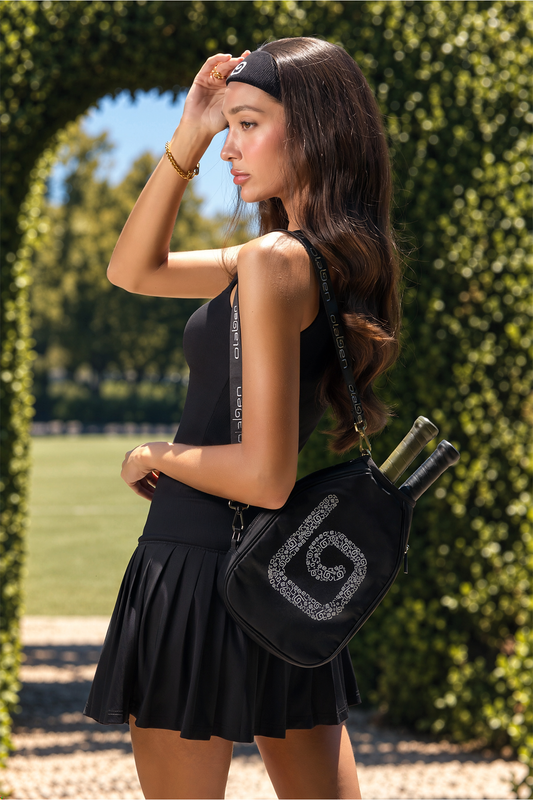
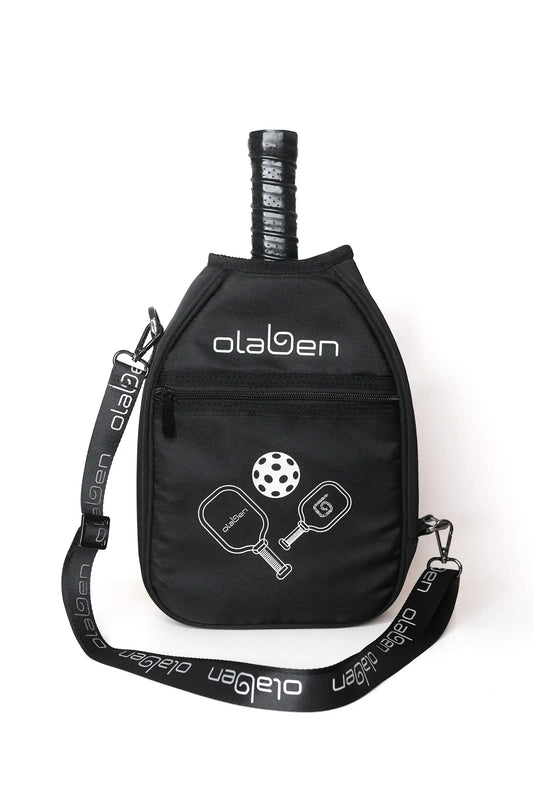
- Use a protective bag: When transporting or storing, use a specialized paddle bag to prevent impacts, scratches, and dust.
- Clean regularly: Wipe the paddle face with a soft, damp cloth after each session, avoiding harsh chemicals. Clean grips and replace them if worn or slippery.
- Avoid strong impacts: Do not hit the paddle on the court or against hard surfaces.
Material-Specific Tips:
- Graphite / Carbon Fiber: Durable, but avoid dropping or strong impacts. Store in a cool place and wipe the face after play.
- Fiberglass: Prone to warping under heat. Wipe dry after cleaning and avoid chemicals.
- Polymer Core: Avoid excessive compression and extreme temperatures to maintain elasticity.
- Nomex / Aluminum Cores: Highly durable; only need to minimize impacts and clean regularly.

Frequently Asked Questions About Pickleball Paddle Materials
Should I choose a Carbon Fiber or Fiberglass paddle face?
The choice of paddle face depends on your playing style. Carbon Fiber provides excellent ball control, precise feel, and quick response, making it ideal for technical players. In contrast, Fiberglass delivers more power, allowing the ball to travel farther and faster, making it perfect for an aggressive, attack-oriented style.
What’s the difference between a 13mm and 16mm paddle core?
A thinner 13mm core offers a faster, more responsive feel, suitable for players who enjoy speed and quick reactions. A thicker 16mm core provides a softer touch, improved ball control, and better vibration reduction, making it easier to play long sessions without hand fatigue.
Which materials help reduce hand fatigue?
To minimize hand fatigue, paddles with a polymer core combined with a graphite or carbon fiber face are the optimal choice. This combination absorbs vibrations, providing a lighter, smoother playing experience, suitable for both beginners and long-term players.
Conclusion
Understanding Pickleball paddle materials is essential for choosing a paddle that matches your skill level, playing style, and long-term goals. Each face material, from graphite, carbon fiber, and fiberglass to composite, offers a unique experience in terms of power, control, and ball feel, while core materials like polymer, Nomex, and aluminum influence comfort, responsiveness, and stability during play.
Proper paddle care also contributes to longevity and performance. Using a protective bag, avoiding extreme temperatures, cleaning regularly, and replacing grips when needed are simple but highly effective habits.
For a complete Pickleball experience, you can explore Olaben’s product collection, including:
- Pickleball paddles in various materials, suitable for all skill levels and playing styles.
- Pickleball equipment such as balls, nets, and paddle racks.
- Bags, backpacks, and pickleball apparel for men (shorts, short-sleeve shirts) and pickleball clothes for women (sports bras, crop tops, skirts), allowing you to move comfortably, protect your gear, and maintain style during matches or training.
With the right combination of quality paddles, essential equipment, and proper accessories, you’ll always be ready to enjoy Pickleball and improve your skills on the court.