Post-workout stretching means holding gentle stretches after exercise, while your muscles are still warm, to ease tightness and help you cool down. Static stretches held for 20 to 30 seconds are best after training, because the muscles relax more easily and you lower the risk of stiffness the next day. Aim for 5 to 10 minutes covering the main muscles you just worked.
Stretch to the point of mild tension, never pain, and keep breathing throughout.

Why stretch after a workout?
- Eases muscle tightness while the muscles are warm and pliable.
- Helps you cool down by gradually lowering your heart rate.
- Supports flexibility over time when done consistently.
- Feels good and signals the end of your session, which helps you relax.
Note that stretching is not a proven cure for muscle soreness, but it does relieve the tight, restricted feeling after hard training.

8 post-workout stretches
1. Standing quad stretch
Stand tall, pull one heel toward your glute, and hold. Stretches the front of the thigh. 20 to 30 seconds each side.
2. Standing hamstring stretch
Place one heel forward, hinge at the hips, and reach toward the toes with a flat back. Stretches the back of the thigh.
3. Chest and shoulder stretch
Clasp your hands behind your back and lift gently. Opens the chest after pushing exercises.
4. Triceps stretch
Reach one arm overhead, bend the elbow, and ease it back with the other hand.
5. Figure-four glute stretch
Lie on your back, cross one ankle over the opposite knee, and pull the thigh in. Stretches the glutes and hips.
6. Child’s Pose
Kneel and fold forward with arms extended. Releases the lower back and shoulders.
7. Calf stretch
Step one foot back, keep the heel down, and lean into a wall. Stretches the calf and Achilles.
8. Seated forward fold
Sit with legs straight, bend the knees slightly, and fold forward. Stretches the hamstrings and lower back.

How long and how often
|
Question |
Answer |
|
Hold each stretch |
20 to 30 seconds |
|
Total time |
5 to 10 minutes |
|
How often |
After every workout |
|
Stretch type |
Static (held), not bouncing |
Common mistakes to avoid
- Bouncing into a stretch. Hold still instead. Bouncing can strain cold or fatigued muscles.
- Stretching into pain. Mild tension is the goal, not discomfort.
- Holding your breath. Breathe slowly to help the muscle relax.
- Rushing. A few seconds per muscle does little. Give each stretch the full hold.
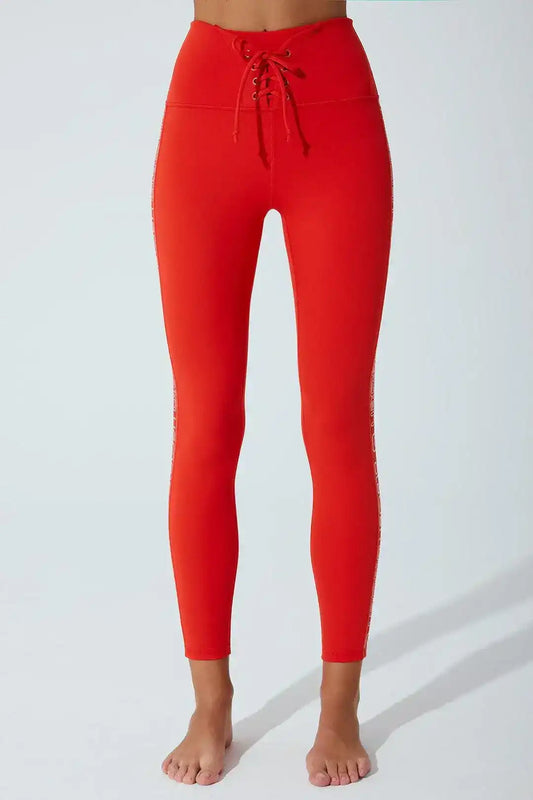
A comfortable mat makes floor stretches easier on your spine and knees, and stretchy leggings let you fold and reach without restriction. See the Olaben mats and the leggings collection.

Frequently asked questions
Should you stretch after every workout?
Yes, a short cool-down stretch after each session helps ease tightness while the muscles are warm and rounds off the workout well.
Is it better to stretch before or after a workout?
Do dynamic, moving stretches before to warm up, and static, held stretches after to cool down. Long static stretches before intense exercise can briefly reduce power.
Does stretching reduce muscle soreness?
It relieves the tight, restricted feeling after training, but research does not show it prevents delayed soreness. Gentle movement and rest also help recovery.
How long should I hold each stretch?
Hold each static stretch for 20 to 30 seconds. Shorter holds have less effect, and there is no need to push past 60 seconds.