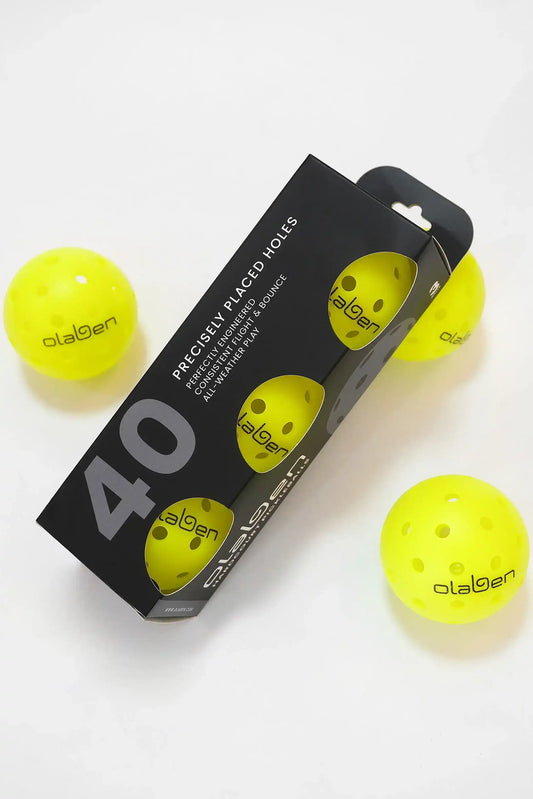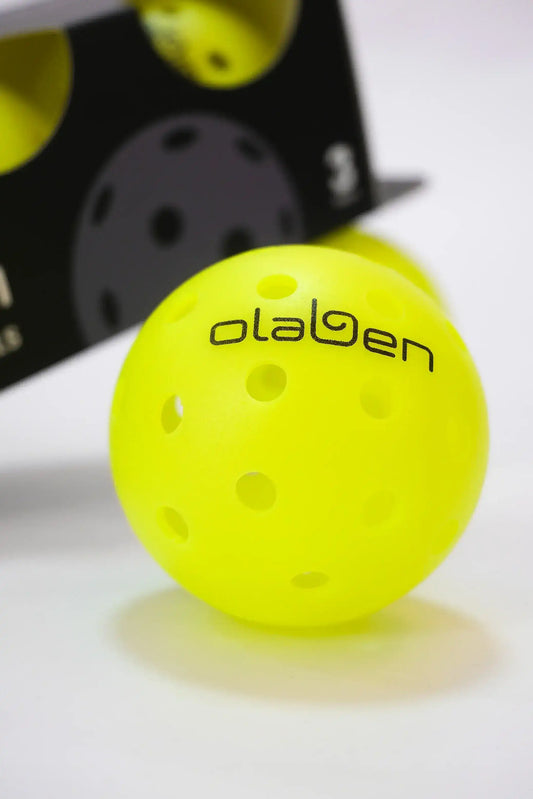
If you’ve ever picked up a pickleball and examined it closely, you’ve probably noticed the evenly spaced holes covering its surface. That naturally leads to the question: How many holes does a pickleball have?
The short answer: An official pickleball has between 26 and 40 round holes.
However, that range only tells part of the story. The exact number of holes, along with their size and spacing, directly influences aerodynamics, control, durability, and overall gameplay.
In this complete guide, we’ll break down official standards, indoor vs. outdoor differences, performance impacts and more.
Official Pickleball Hole Count (USA Pickleball Standards)
Before diving into performance differences, it’s important to understand what makes a pickleball “official.”
According to USA Pickleball, a tournament-approved pickleball must:
- Have a minimum of 26 and a maximum of 40 circular holes
- Feature evenly spaced holes
- Be constructed from durable molded plastic
- Have a smooth, untextured surface
- Be a single uniform color (excluding logos)
- Display a manufacturer’s name or logo
Additionally, the ball’s design including hole spacing, must allow it to fly straight and consistently under normal playing conditions.
Bottom line: If a pickleball has fewer than 26 holes or more than 40 holes, it cannot be officially approved for competitive tournament play.

Outdoor versus Indoor Pickleball: Why Hole Count Matters
While the official range is 26–40 holes, most balls follow a predictable pattern depending on where they are played. The biggest difference between indoor and outdoor pickleballs is both the number and size of the holes.
The ball is engineered specifically for its playing environment.
-
Outdoor Pickleballs (Typically 40 Holes)
Outdoor pickleballs are specifically engineered to perform in demanding environments. They are built to withstand wind, heat and humidity, and hard court surfaces such as concrete and asphalt. In addition, they are designed to support faster, more aggressive styles of play, which are common in outdoor matches.
One of their defining features is the use of 40 smaller, tightly spaced holes. These holes typically measure around 0.282 inches in diameter, contributing to improved aerodynamic stability. Outdoor balls are also slightly heavier than indoor balls and made with harder plastic construction, allowing them to handle rougher playing surfaces without deforming easily.
Because of this construction, outdoor pickleballs deliver faster overall speed and increased wind resistance. The smaller holes help reduce drag inconsistencies, allowing the ball to maintain a stable and predictable flight path, even in windy conditions.
Since outdoor courts are typically harder and more abrasive, the ball must also be more durable and resistant to cracking, ensuring consistent performance over extended play.
-
Indoor Pickleballs (Typically 26 Holes)
Indoor pickleballs are specifically designed for controlled, climate-regulated environments such as gymnasiums. Because they are not exposed to wind or changing weather conditions, their construction focuses primarily on control and a softer bounce, rather than wind resistance.
A defining feature of indoor balls is their 26 larger holes, with each hole measuring around 0.43 inches in diameter, approximately 40% larger than outdoor holes. These balls are typically lighter in weight and made from softer plastic material, contributing to a different overall feel during play.
As a result, indoor pickleballs promote a slower pace of play and deliver a more controlled, predictable bounce, especially on smooth wooden gym floors. The larger holes create slightly more drag, which helps reduce speed and enhances shot precision.
Because of these characteristics, indoor pickleball often demands greater finesse and technical accuracy, rewarding players who rely on placement, touch, and strategic control rather than pure power.
How Hole Design Affects Performance
The holes in a pickleball are not decorative, they are essential to how the ball performs in real-game conditions.
Here’s how hole count and design impact gameplay:
- Aerodynamics: The number and size of holes determine how air flows around the ball, affecting drag and wind resistance.
- Flight stability: Evenly spaced holes prevent fluttering and wobbling mid-air, ensuring straighter trajectories.
- Spin response: Hole patterns influence how the ball grips air during spin shots, affecting topspin, backspin, and slice performance.
- Speed: Smaller holes typically produce faster gameplay. Larger holes slow the ball slightly due to increased air drag.
- Bounce consistency: Indoor balls with larger holes often produce a softer, more controlled bounce. Outdoor balls bounce firmer and faster.
Even a small change, such as two fewer holes, can alter the ball’s flight dynamics in noticeable ways during competitive play.

Pickleball vs Wiffle Ball: Hole Differences
Pickleballs are often mistaken for wiffle balls because they look similar. However, their design purpose is completely different.
|
Feature |
Pickleball |
Wiffle Ball |
|
Weight |
~0.88 oz |
~0.7 oz |
|
Hole Shape |
Round & evenly spaced |
8 oblong holes on one side |
|
Balance |
Uniform airflow |
Asymmetrical airflow |
|
Purpose |
Competitive sport |
Backyard recreation |
Pickleballs are engineered for straight, consistent flight, while wiffle balls are intentionally designed to curve and dip.
So, How Many Holes Does a Pickleball Have?
The simple answer is that an official pickleball must have between 26 and 40 holes. Within that approved range, most balls follow a common pattern. Most outdoor pickleballs have 40 holes, while most indoor pickleballs have 26 holes. In some cases, specialty or performance-focused balls may feature 32 or 38 holes, depending on the manufacturer’s design strategy.
The exact number of holes ultimately depends on several factors. These include the playing environment, since indoor and outdoor conditions require different aerodynamic properties. It also depends on the ball’s design goals, such as prioritizing speed, control, durability, or wind resistance.
In addition, manufacturer innovation plays a role, as brands continuously experiment with hole patterns to improve consistency and performance. Finally, all designs must meet tournament approval requirements, ensuring the ball falls within the official 26–40 hole standard.

Final Thoughts: Small Details, Big Impact
At first glance, all pickleballs may look nearly identical. Yet the number, size, and placement of the holes significantly influence how the game feels, flows, and performs. What seems like a small technical detail can dramatically affect ball speed, wind resistance, bounce consistency, and overall control on the court.
Whether you’re competing indoors on a polished wooden surface or battling wind outdoors on concrete, choosing the right ball helps create better rhythm, more consistent shots, improved control, and enhanced overall performance. However, performance doesn’t stop with the ball itself, what you wear and use on court also plays a key role in how confidently and comfortably you move.
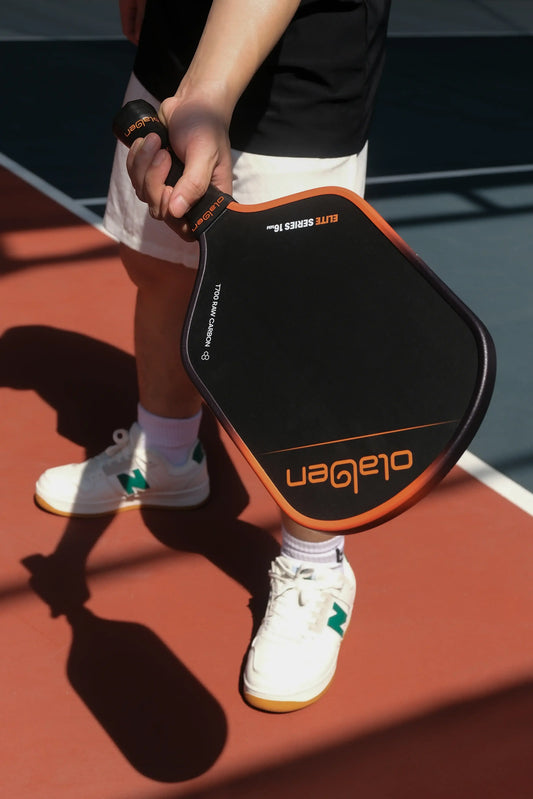
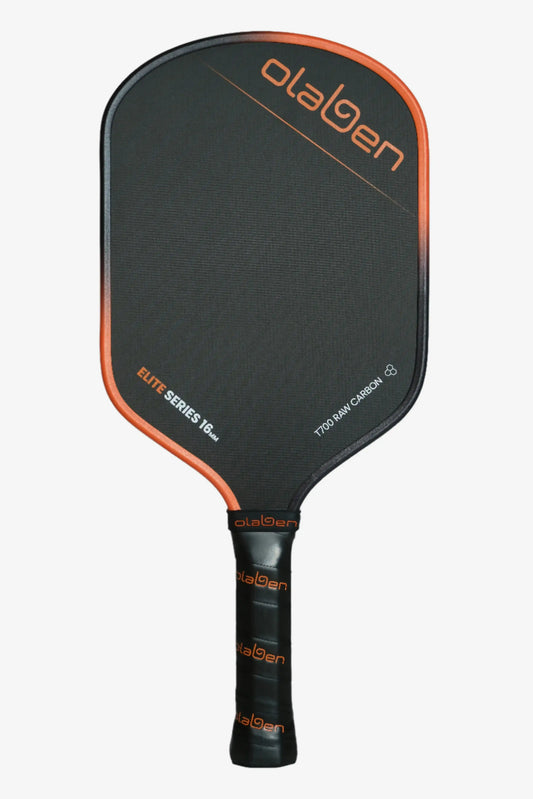
The right gear can make a noticeable difference in your performance on the court. Olaben’s pickleball apparel collection including breathable women’s sports dresses, flexible women’s sports skirts, supportive sports bras, and moisture-wicking men’s short-sleeved t-shirts with men’s shorts is designed to enhance comfort, mobility, and confidence during fast-paced rallies. Pair that with high-quality paddles from the pickleball equipment collection, and you’ll have the balance, control, and consistency needed to elevate your overall game.
So next time someone asks, “How many holes does a pickleball have?” you’ll know it’s not just about counting holes. It’s about how thoughtful design shapes the game and how the right apparel and equipment help shape your performance on the court.