When stress spikes or sleep will not come, you do not need an app or any equipment, just your breath. The 4-7-8 technique is a simple, paced breathing pattern that calms the nervous system fast, often within a cycle or two. Popularized by Dr. Andrew Weil and rooted in yogic pranayama, it has become one of the most shared tools for winding down. Here is exactly how to do it, why it works, and how often to practice.

What is 4-7-8 breathing?
It is a breathing pattern with three timed parts: inhale for 4 counts, hold for 7 counts, and exhale for 8 counts. The long, slow exhale is the active ingredient. By stretching the out-breath, you stimulate the vagus nerve and switch on the body’s natural relaxation response, slowing the heart rate and easing the mind.
It is not a trick that “knocks you out.” It lowers the stress and arousal that keep you awake or on edge, which makes calm and sleep far more likely.
How to do it, step by step
- Sit or lie down comfortably. Rest the tip of your tongue against the ridge of tissue just behind your upper front teeth, and keep it there throughout.
- Exhale completely through your mouth, around your tongue, making a soft whoosh sound.
- Close your mouth and inhale quietly through your nose for 4 counts.
- Hold your breath for 7 counts.
- Exhale through your mouth for 8 counts with the whoosh sound.
- That is one cycle. Repeat for 3 to 4 cycles.
The counts matter less than the ratio. Keep the exhale longer than the inhale, and slow the whole thing down to a pace you can hold without straining.

The benefits
|
Benefit |
What happens |
|
Calmer mind |
Activates the relaxation response, easing anxiety |
|
Better sleep |
Slows heart rate and quiets the mind before bed |
|
Lower stress |
Eases the body out of fight-or-flight |
|
Sharper focus |
A quick reset that clears mental urgency |
|
Anytime, anywhere |
No equipment, free, and discreet |
The calming effect is fast: a slower heart rate and less mental urgency often register within one or two complete cycles, so under a minute.
When and how often to practice
- For sleep: run 3 to 4 cycles in bed, lights off, as you settle in.
- For stress: use it the moment you feel tension rising, before a meeting, in traffic, mid-overwhelm.
- As a daily habit: practicing twice a day (for example morning and night) builds the strongest effect.
A sensible starting dose is no more than 4 cycles per session for the first month, since the longer breath-hold can feel light-headed at first. Build up gradually, and give it 4 to 6 weeks of regular use before judging the deeper effects on sleep and baseline anxiety.

Tips to get the most from it
- Do not force the breath. If 4-7-8 feels too long, keep the ratio but shorten the counts (for example 2-3.5-4).
- Stop if you feel dizzy. Light-headedness means ease off; return to normal breathing.
- Pair it with a wind-down. Combine with dim lights, no screens, and a few gentle stretches for a stronger effect.
- Stack it with movement. Use it to close a gentle yoga session, when the body is already relaxed.
How it fits a bigger calm routine
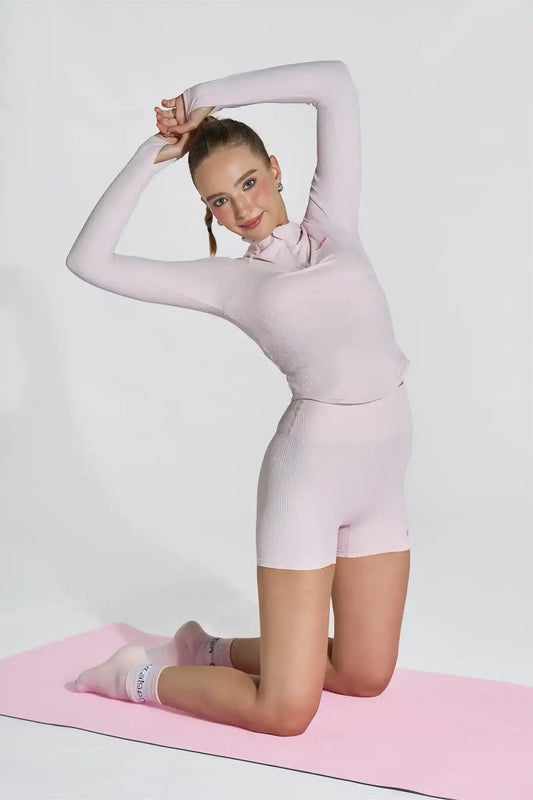
The 4-7-8 breath is one tool in a larger toolkit. It works beautifully alongside mindfulness, a screen-free evening, and slow movement. For deeper calm, combine it with mindful breathing throughout the day and a short evening yoga reset. Practicing in soft, comfortable activewear makes it easier to relax fully.
A note on safety
4-7-8 breathing is generally safe for healthy adults. If you are pregnant, have a respiratory or heart condition, or feel persistently dizzy, check with a healthcare professional and keep the breath gentle. Never practice paced breath-holds while driving or in water.
FAQ
Does 4-7-8 breathing really help you sleep?
It does not force sleep, but it lowers heart rate and calms the mind, which makes falling asleep more likely. Many people use it as part of a bedtime routine.
How many times a day should I do it?
Twice a day is a common recommendation, for example morning and before bed. Start with up to 4 cycles per session and build slowly.
Why hold the breath for 7 counts?
The hold plus the long 8-count exhale slows your breathing and triggers the relaxation response. The extended exhale is the key part.
What if I feel light-headed?
Stop and breathe normally. Shorten the counts while keeping the ratio, and build up gradually as it gets comfortable.