Cat-Cow Pose (Marjaryasana-Bitilasana) is a well-known yoga movement that gently connects breath with spinal motion. Often practiced at the beginning of a yoga session, this flowing sequence helps prepare the body for deeper stretches while encouraging mindful breathing and body awareness. Because of its simplicity and effectiveness, Cat-Cow is widely considered a foundational practice for yogis of all levels.
In this article, we’ll explore Cat-Cow Pose in greater detail, including its meaning, benefits, step-by-step instructions, variations, and helpful tips to practice it safely and effectively.
The Meaning Behind Marjaryasana - Bitilasana
The name of this yoga sequence comes from Sanskrit, where “Marjari” means cat, “Bitila” means cow, and “Asana” means pose. When combined, Marjaryasana-Bitilasana describes the rhythmic movement between Cat and Cow poses, creating a gentle flow that mobilizes and awakens the spine.
This sequence is commonly taught in many yoga classes as a warm-up because it helps prepare the body for both basic yoga poses and more advanced yoga poses later in a practice. You may also hear this movement referred to as Cat-Cow Flow or Chakravakasana, highlighting its role as a smooth, breath-synchronized transition between the two postures.

Benefits of Cat-Cow Pose
Although simple, Cat-Cow Pose offers several important benefits for both the body and the nervous system when practiced regularly:
- Improves spinal flexibility: Alternating between rounding and arching the back creates space between the vertebrae, helping maintain natural spinal mobility and reducing stiffness from long periods of sitting.
- Relieves pain in the back, neck, and shoulders: Gentle movement of the spine with the breath helps surrounding muscles relax and release built-up tension, making it especially helpful after long hours at a computer.
- Stimulates abdominal organs: The expansion and contraction of the belly during each breath provides a gentle massage for internal organs, supporting digestion and circulation.
- Enhances body awareness and breath control: Synchronizing each movement with inhalation and exhalation helps practitioners develop a stronger connection between breath, spinal movement, and core engagement, which builds a solid foundation for more advanced yoga sequences.
Energetic and Ayurvedic Perspective
From the perspective of yoga philosophy and Ayurveda, Cat-Cow is believed to balance all three doshas: Vata, Pitta, and Kapha.
The inhalation during Cow Pose has a cooling quality, while the exhalation during Cat Pose carries a warming quality, helping maintain energetic balance in the body. The sequence also stimulates the Sushumna Nadi, the primary energy channel that runs along the spine.
Additionally, Cat-Cow activates the nabhi marma (the energy point at the navel) and influences the third chakra, Manipura, which is associated with digestion, inner strength, and energetic balance.
Step-by-Step Instructions for Cat-Cow Pose
1. Hands-and-Knees Position (Tabletop Setup)
- Begin on your hands and knees on a yoga mat.
- Spread your fingers wide and press gently through your fingertips and palms.
- Place your wrists directly under your shoulders and your knees under your hips.
- Rotate your upper arms slightly outward so the elbow creases face forward.
- Keep your neck neutral and look at the floor just in front of your hands.
2. Cow Pose - Bitilasana (Inhale)
- As you inhale, tip your pelvis forward as if it were a bowl pouring water out the front.
- Lift your tailbone and widen your sit bones.
- Let your belly drop naturally toward the mat while keeping your core lightly engaged.
- Open your chest and gently lift your chin to look toward the ceiling.
- Your spine forms a soft U-shaped curve from tailbone to neck in Cow Pose.
3. Cat Pose - Marjaryasana (Exhale)
- On your exhale, scoop your pelvis under to stop the “imaginary water” from spilling.
- Tuck your tailbone and round your spine upward.
- Draw your belly button toward your spine to engage your core.
- Let your chin move toward your chest and shift your gaze toward your navel.
- Your back forms a rounded shape like a stretching cat in Cat Pose.
4. Continue the Flow
- Move slowly between Cow and Cat with each breath.
- Inhale as you open into Cow and exhale as you round into Cat.
- Repeat the sequence for 5-10 rounds to gently warm up and mobilize your spine.

Variations of Cat-Cow Pose
In addition to the traditional hands-and-knees version, Cat-Cow has several variations that make it accessible in different situations.
Seated Cat-Cow (Chair Yoga Variation) is a great option when you are working at a desk or traveling.
- Sit upright on a chair with feet flat on the floor and hands resting on your knees.
- Inhale: Open your chest and gently arch your back, lifting your gaze slightly.
- Exhale: Round your spine and draw your chin toward your chest.
- Repeat slowly for several breaths to release tension in the back and shoulders.
Another variation is Pelvic Tilts (Supine Cat-Cow Variation), which is performed lying on your back with your knees bent.
- Lie on your back with knees bent and feet flat on the floor.
- Exhale: Press your pelvis toward the floor, flattening your lower back against the mat.
- Inhale: Gently arch your lower spine, creating a small space between your back and the floor.
- Continue for several slow breaths to improve pelvic awareness and lower back support.
Complementary and Relaxation Poses After Cat-Cow
After completing Cat-Cow, many yoga teachers recommend transitioning into Child’s Pose to relax the spine. In this pose, you sit your hips back toward your heels, extend your arms forward, and rest your forehead on the mat, creating a gentle stretch along the entire back.
Other poses such as Sphinx Pose, Uttanasana, or Upward-Facing Dog Pose are also often practiced afterward to further improve spinal mobility and flexibility.
Safety Tips for Practicing Cat-Cow
Cat-Cow Pose is generally safe and beginner-friendly, but certain conditions require extra caution.
If you have recently undergone abdominal or pelvic surgery, it is best to avoid this sequence until your body has fully healed. Individuals with acute neck, back, or knee injuries should also practice carefully or consult a professional before performing the pose.
During the practice, always move slowly and follow your breath, avoiding forcing your body into a large range of motion. If you feel pain or discomfort, pause and adjust the movement to a comfortable level.

Conclusion
Cat-Cow Pose (Marjaryasana-Bitilasana) is a simple yet highly effective yoga sequence that helps warm up the body, improve spinal flexibility, and connect breath with movement. Just a few minutes of practice each day can reduce back stiffness, improve posture, and help your body feel lighter after long hours of sitting.
Practicing Cat-Cow regularly not only supports spinal health, but also promotes greater body awareness and energetic balance, making it an essential foundation for any yoga journey.
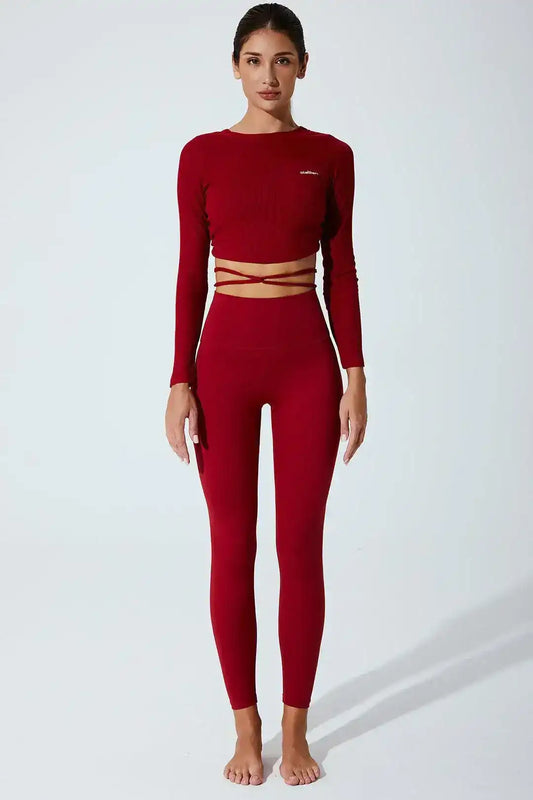
Whether you prefer flexible women's yoga outfits such as women's short-sleeved sports shirts, supportive women's leggings, or a stylish women's sports dress or sports skirt, choosing the right yoga outfit can make your practice even more comfortable. For cooler days or warm-ups before your session, layering with a lightweight women's sports jacket is also a great option. Explore more stylish and premium yoga clothes collections from Olaben to elevate your yoga routine with comfort and confidence.