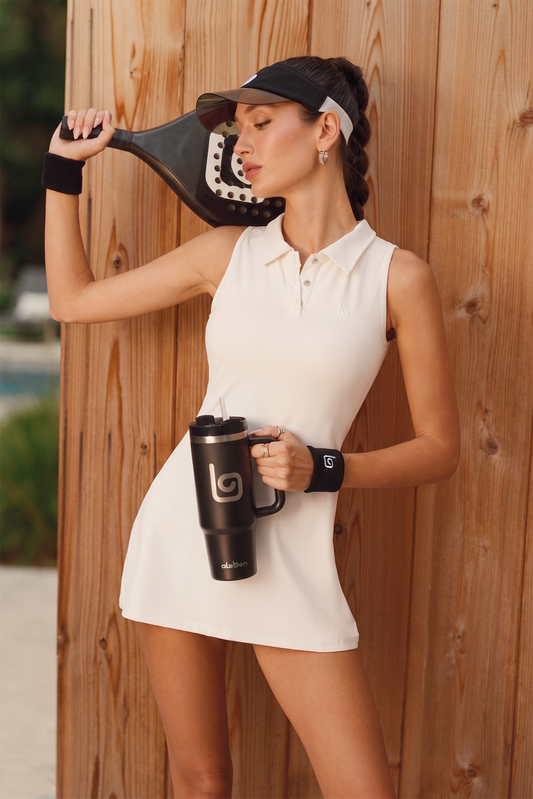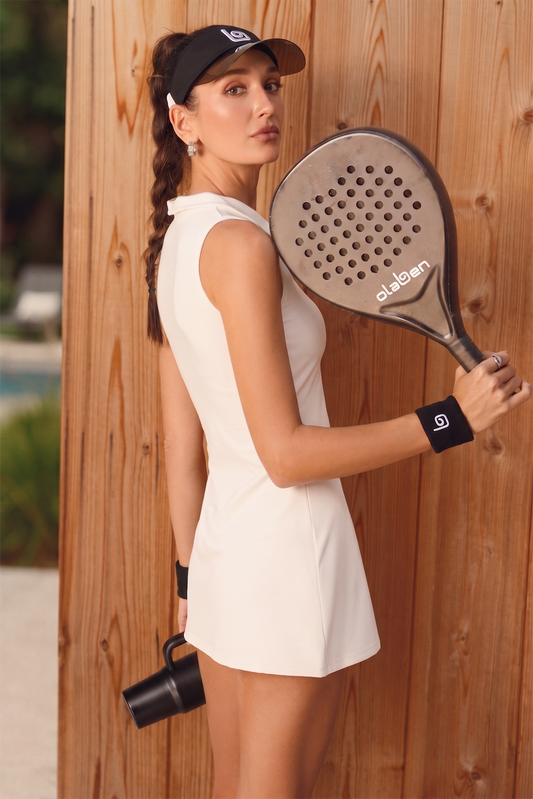
Padel is a racket sport played almost always in doubles on an enclosed court about a third the size of a tennis court. The walls are part of the game: after the ball bounces on your side, you can play it off the glass, a bit like squash. You use a solid, stringless paddle and a low-pressure tennis-style ball, and you serve underhand. It’s easy to start, very social, and one of the fastest-growing sports in the world.
If you already play pickleball or tennis, this guide explains what’s different and what will feel familiar.
Where padel comes from
Padel was invented in 1969 in Acapulco, Mexico, by Enrique Corcuera, who adapted a squash-sized space at his home into a walled court with a net. The sport spread to Spain and Argentina in the 1970s, which are still its strongholds. The International Padel Federation (FIP) was founded in Madrid in 1991 and governs the rules today.
The padel court
- Size: 20 m long by 10 m wide (about 66 x 33 ft), split by a net.
- Walls: glass at the back and partly along the sides, the rest metal mesh. The ball can come off the walls and stay in play.
- Surface: usually artificial grass with sand infill, which gives a predictable bounce.
For comparison, a doubles tennis court is 23.77 x 10.97 m, and a pickleball court is 20 x 44 ft (about 6.1 x 13.4 m). See our guides to tennis court dimensions and pickleball court dimensions.
Basic padel rules
Serving
- The serve is underhand. You bounce the ball behind the service line and hit it at or below waist height.
- Serve diagonally into the opposite service box, like tennis.
- The ball must bounce in the box before it can touch the walls. If it hits the side or back glass after bouncing in, it’s good. If it hits the mesh, it’s a fault.
- You get two attempts, as in tennis.
During the rally
- The ball can bounce once on your side before you return it.
- After that bounce, it can hit your walls and you can still play it.
- You can volley (hit before the bounce), except on the return of serve.
- Your shot must go over the net and land in the opponent’s court before it touches their walls.
- You can’t hit the ball off your own walls into the opponent’s court in one move, except in specific advanced plays allowed under FIP rules.
Scoring
Padel uses tennis scoring: 15, 30, 40, game; six games to win a set; matches are usually best of three sets. Many clubs and pro events use a “golden point” at deuce (40-40), where the next point wins the game.
Padel equipment
- Paddle (pala): solid, no strings, with a perforated face. FIP limits length to 45.5 cm and thickness to 38 mm. Most weigh around 350 to 375 g and attach to your wrist with a safety cord.
- Ball: looks like a tennis ball but has slightly lower pressure, so it’s a bit slower.
- Shoes: padel or clay-court shoes with a herringbone sole grip the sandy turf. Running shoes slip.
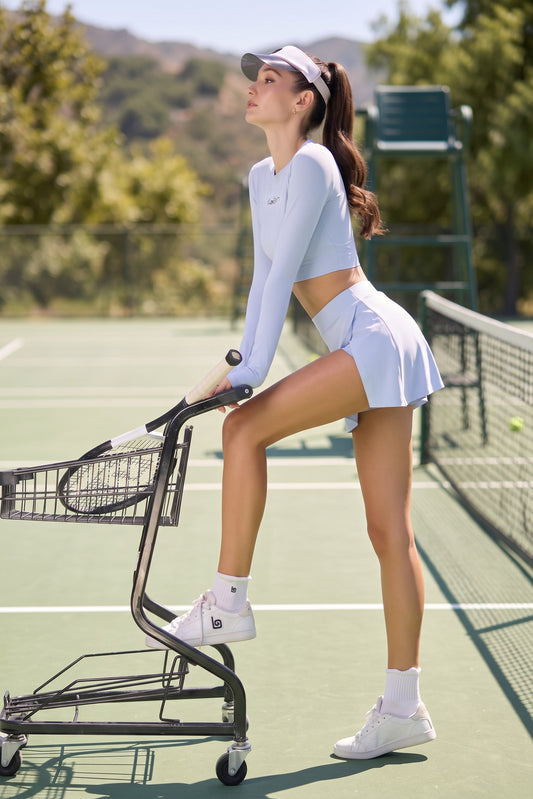
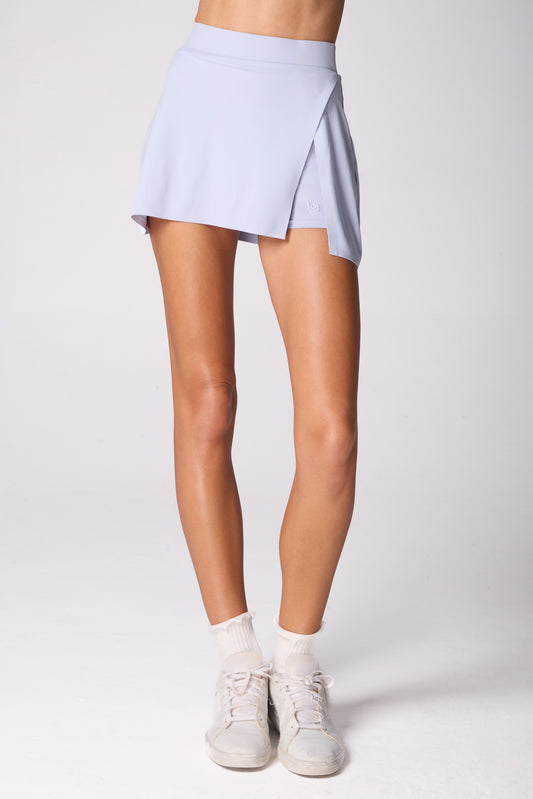
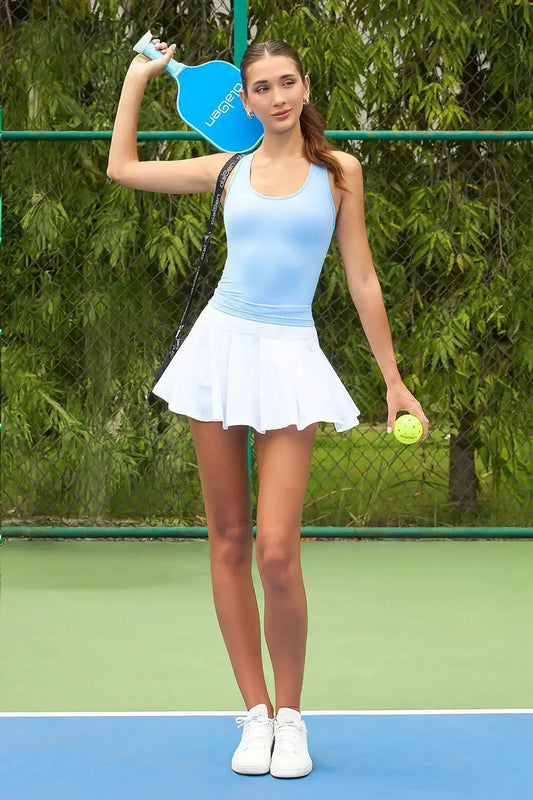
- Clothes: the same court clothing you’d wear for tennis or pickleball works: breathable tops, skirts or shorts with ball pockets, a visor or cap for outdoor courts.

Padel vs pickleball vs tennis
|
|
Padel |
Pickleball |
Tennis |
|
Court |
20 x 10 m, enclosed by walls |
20 x 44 ft (6.1 x 13.4 m), open |
23.77 x 10.97 m (doubles), open |
|
Format |
Almost always doubles |
Singles or doubles, mostly doubles |
Singles or doubles |
|
Racket |
Solid, perforated, no strings |
Solid paddle, no holes |
Strung racket |
|
Ball |
Low-pressure felt ball |
Plastic ball with holes |
Pressurized felt ball |
|
Serve |
Underhand, after a bounce |
Underhand (or drop serve) |
Overhand |
|
Walls in play |
Yes |
No |
No |
|
No-volley zone |
No |
Yes (the kitchen) |
No |
|
Scoring |
Tennis scoring |
Games usually to 11 |
Tennis scoring |
|
Learning curve |
Easy start, deep strategy |
Easiest start |
Hardest to start |
|
Physical demand |
Moderate to high |
Low to moderate |
High |
The main feel difference: pickleball is about soft dinks and patience at the kitchen line. Padel is about angles, lobs, and reading the ball off the glass. Tennis demands the most technique and running. More on the other two in our tennis vs pickleball comparison.
Which should you play?
- Pickleball if you want the fastest start, a smaller court, and lots of places to play. Start with what is pickleball and the basic rules.
- Padel if you like longer rallies, using walls and angles, and always playing with three friends.
- Tennis if you want the full athletic challenge and the most structured path to competition.
Many players mix them. Skills carry over: tennis players adapt to padel quickly (the strokes are similar but more compact), and pickleball players bring good soft hands and doubles positioning.

Tips for your first padel game
- Let the ball come off the back glass. Beginners rush it. Waiting gives you more time.
- Keep your swing compact. No big tennis backswing; the court is small.
- Play as a pair. Move forward and back together with your partner.
- Use the lob. It’s the most important shot in padel for getting to the net.
- Wear proper shoes. Turf with sand is slippery in running shoes.
What to wear for padel
The same kit you’d wear for pickleball or tennis:
- A breathable, quick-dry top like the Centre Court Polo
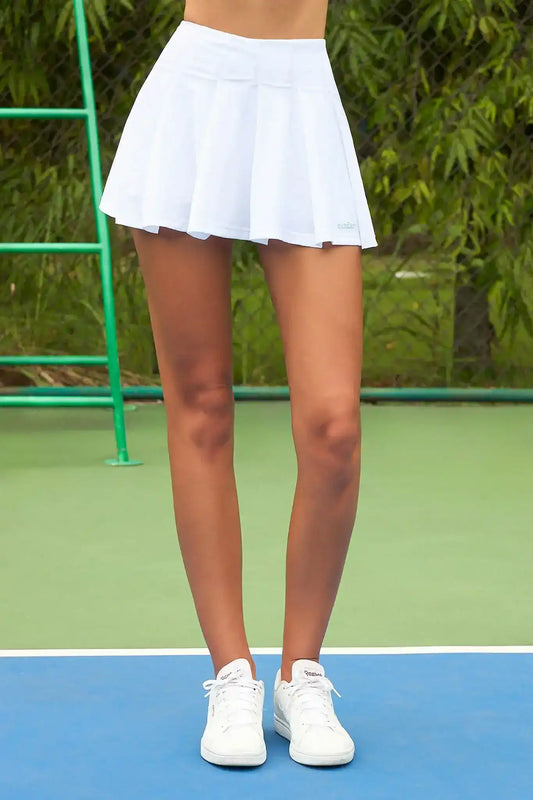
- A skirt with built-in shorts and ball pockets, such as the Court Flow Skirt, or court shorts
- A visor for outdoor courts
- A supportive sports bra for quick lateral moves
Shop our pickleball and court collection or read what to wear for pickleball.

FAQ
What is padel in simple terms?
A doubles racket sport played on a small walled court, mixing tennis scoring with squash-style play off the walls, using a solid paddle and underhand serves.
Is padel the same as pickleball?
No. Both use solid paddles and underhand serves, but padel is played with walls, a felt ball, and tennis scoring. Pickleball has no walls, uses a plastic ball with holes, and has a no-volley “kitchen” zone.
Is padel easier than tennis?
For most beginners, yes. The court is smaller, the serve is underhand, and the walls keep rallies going, so you can enjoy games sooner.
Can you play padel singles?
There are singles courts (6 m wide), but they’re rare. Padel is overwhelmingly played as doubles.
How big is a padel court?
20 m long and 10 m wide, enclosed by glass and mesh walls.
What do I need to start playing padel?
A padel paddle (clubs often rent them), padel balls, court shoes with grip for turf, and comfortable court clothing.
The bottom line
Padel is a social, walled-court doubles game that’s easy to learn and hard to master. If you already enjoy pickleball or tennis, it’s a natural next sport to try. Start with a rental paddle, good court shoes, and breathable court clothes from our pickleball collection.