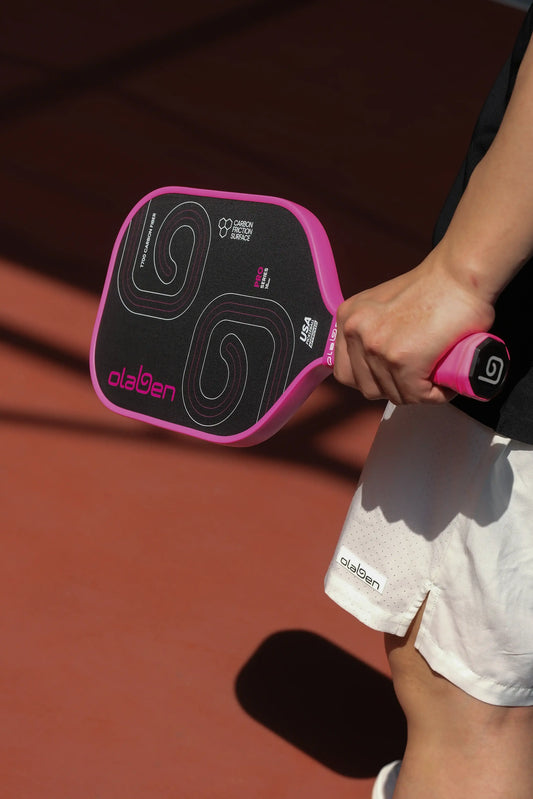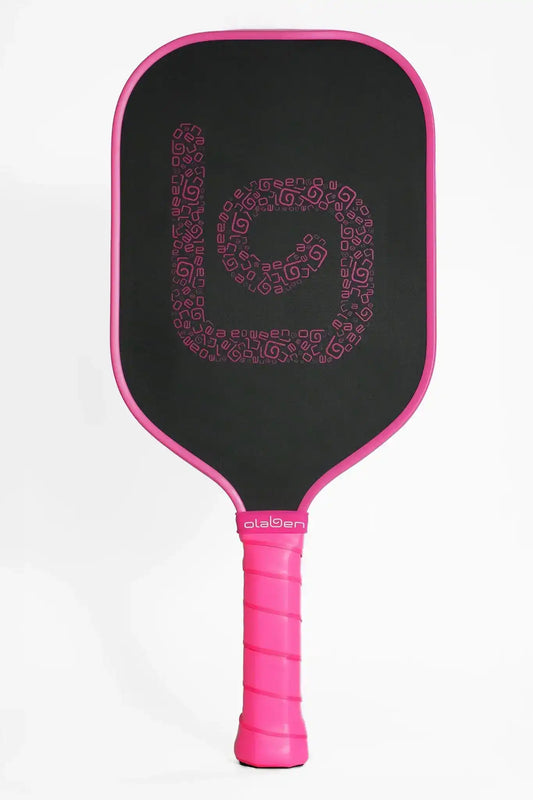
Pickleball is a rapidly growing sport, and choosing the right paddle face size can significantly affect your hitting feel and overall performance on the court. Each paddle type features a different design, ranging from standard shapes that are easy to control to elongated paddles that increase reach, or wider faces that provide more stable ball contact. In this article, Olaben will explore four common pickleball paddle face sizes and help you understand how to choose the one that best suits your playing style.
Overview of Pickleball Paddle Face Sizes Today
According to competition standards set by USA Pickleball and the International Pickleball Federation, the rules do not specify an exact paddle face size. Instead, they limit the overall dimensions of the paddle. This approach allows manufacturers to create a variety of paddle designs while ensuring that all paddles remain within the same technical limits to maintain fairness in competition.
Specifically, the basic pickleball paddle specifications include:
- Maximum length (including handle): 17 inches (about 43.18 cm)
- Maximum width: 8.25 inches (about 20.96 cm)
- Combined length + width: must not exceed 24 inches (about 60.96 cm)
Because the rules only limit the overall size, the paddle face, the area that contacts the ball, can vary within this range. As a result, manufacturers have developed several paddle designs to suit different playing styles.
Some of the most common paddle face size types on the market today include:
|
Paddle Type |
Typical Dimensions |
Key Characteristics |
Best For |
|
Widebody Paddle |
Wider face, often close to the maximum ~8 inches; shorter length around 15–15.5 inches |
Larger hitting surface (wider sweet spot), making it easier to hit the ball and improving stability |
Beginners or players who prioritize control |
|
Elongated Paddle |
Length close to the maximum ~17 inches; narrower width |
Provides greater reach, stronger power, and better spin potential |
Experienced or offensive-style players |
In addition to size, paddle thickness also directly affects the feel of each shot. The most common thicknesses range from 10 mm to 19 mm, with 13 mm, 14 mm, and 16 mm being the most widely used. Thinner paddles generally provide better speed and power, while thicker paddles improve stability, reduce vibration, and enhance ball control.
Overall, although pickleball paddle faces must fit within the 24-inch combined dimension rule, players still have plenty of options in terms of shape and specifications. Choosing pickleball paddle between a widebody or elongated paddle, as well as thinner or thicker designs, should depend on your skill level, playing style, and personal comfort.
Besides paddle size, beginners are often curious about other aspects of the sport such as pickleball court dimensions, pickleball net height, and pickleball ball size. These specifications are clearly defined in official rules to ensure consistency and fairness in matches.

4 Common Pickleball Paddle Face Sizes
Standard Paddle Size
The Standard paddle is the most common size in pickleball and is widely chosen by players for its balance of control, speed, and stability. This design is neither too long nor too wide, making it easier to handle and allowing players to develop a natural hitting feel from their very first practice sessions.
Thanks to its balanced structure, the Standard paddle is ideal for building fundamental techniques such as ball placement, dinks, volleys, and net returns. At the same time, players can still execute moderate attacking shots without needing excessive power.
Common Specifications
- Paddle face size: about 40.6 × 20.3 cm
- Thickness: 13 – 16 mm
- Average weight: 7.5 – 8 oz (213 – 227 g)
These specifications create a paddle that offers good wrist flexibility while maintaining enough stability for effective ball control.
Advantages
- Easy ball control and fewer mishits, thanks to the balanced paddle face that helps players adjust direction and power more accurately in different situations.
- Suitable for multiple playing styles, from control-based net play to moderate attacking shots when increasing the pace of the game.
- Supports long-term skill development, especially helpful for beginners practicing essential techniques such as dinks, volleys, blocks, and drives.
- Stable and easy-to-adapt hitting feel, allowing players to quickly adjust to different court conditions and match tempos.
Disadvantages
- Shorter reach compared to elongated paddles, which may be less advantageous when stretching for wide balls or returning deep shots from the baseline.
- Not optimized for maximum power, particularly for strong baseline smashes, as the design prioritizes balance and control over raw power.
Best Suited For
- Beginner pickleball players
- Players who prefer control and ball placement strategies
- Anyone looking for a balanced, versatile paddle that is comfortable for long-term use.
Elongated Paddle Size
The Elongated paddle features a longer design compared to the standard paddle, allowing players to gain greater reach and stronger hitting power. This type of paddle is commonly chosen by players who prefer an aggressive playing style, especially for shots such as drives, smashes, or baseline attacks.
Thanks to its extended length, an elongated paddle can generate more powerful and faster shots, while also helping players produce better spin when executing topspin or slice shots.
Common Specifications
- Paddle length: about 41.9 – 43.2 cm
- Paddle face width: about 17.8 – 19.1 cm
- Thickness: 13 – 16 mm
- Weight: around 221 – 232 g
This design maximizes reach and hitting power, though it usually comes with a narrower paddle face.
Advantages
- Extended reach when hitting the ball, making it easier to return wide or low shots from the baseline that standard paddles may struggle to handle.
- Stronger power for smashes and drives, as the longer paddle body helps transfer energy more effectively during powerful swings.
- Effective for counterattacks and finishing points from distance, especially when players rely on speed and power to pressure their opponents.
Disadvantages
- Narrower paddle face, resulting in a smaller sweet spot and making off-center hits more likely if the ball is not well aligned.
- Less control in soft shots or dinks near the net, since the design prioritizes reach and power rather than delicate control.
- Requires better technique and ball feel, otherwise players may lose control during quick exchanges.
Best Suited For
- Intermediate to advanced players
- Players who prefer an aggressive or power-based playing style
- Players who want greater reach and stronger hitting power on the court.
Hybrid Paddle Size
The Hybrid paddle is designed to balance the two popular paddle types: Standard and Elongated. By combining elements of both designs, players can switch more easily between control-oriented play and attacking shots without sacrificing too much reach or stability.
Hybrid paddles are typically built for versatility, helping players adapt to many match situations, from controlled rallies in the mid-court to powerful drives or counterattacks when the pace of the game increases.
Common Characteristics
- Paddle length: about 41.2 cm
- Paddle face width: about 19 – 19.5 cm
- Thickness: 13 – 16 mm
- Balanced design between paddle surface area and power generation
Advantages
- Highly adaptable, offering enough reach for attacking shots while maintaining stability for controlled play.
- Suitable for flexible playing styles, allowing players to shift between defense and offense during a match.
Disadvantages
- Not specialized in one particular strength, since the design prioritizes balance rather than maximizing either power or control.
- May require an adjustment period for players to fully benefit from its balanced characteristics.
Best Suited For
- Intermediate to advanced players
- Players who prefer a versatile playing style and frequently change the pace of the match
- Players looking for a multi-purpose paddle that adapts well to various situations on the court
Widebody Paddle Size
The Widebody paddle stands out with a wider paddle face compared to other paddle types, which expands the sweet spot (the optimal contact area). As a result, players can hit the ball more consistently and reduce off-center errors, especially during quick exchanges near the net.
This type of paddle is considered beginner-friendly, while still being suitable for players who prioritize control and accuracy in their game.
Common Characteristics
- Paddle length: about 40.3 – 40.5 cm
- Paddle face width: about 20.3 cm
- Thickness: 13 – 16 mm
- Wider sweet spot for improved stability during ball contact
Advantages
- Larger paddle face, making it easier to contact the ball and reducing mishits.
- Excellent control for dinks, drops, and volleys, especially in net play situations.
Disadvantages
- Shorter reach compared to elongated paddles, which may be less effective when returning wide or deep shots.
- Not optimized for maximum power, particularly for deep smashes, since the design focuses more on stability and control.
Best Suited For
- Beginner pickleball players
- Players who prioritize ball control and accuracy
- Recreational players or those who prefer a defensive playing style.

Elevate Your Pickleball Experience with Olaben
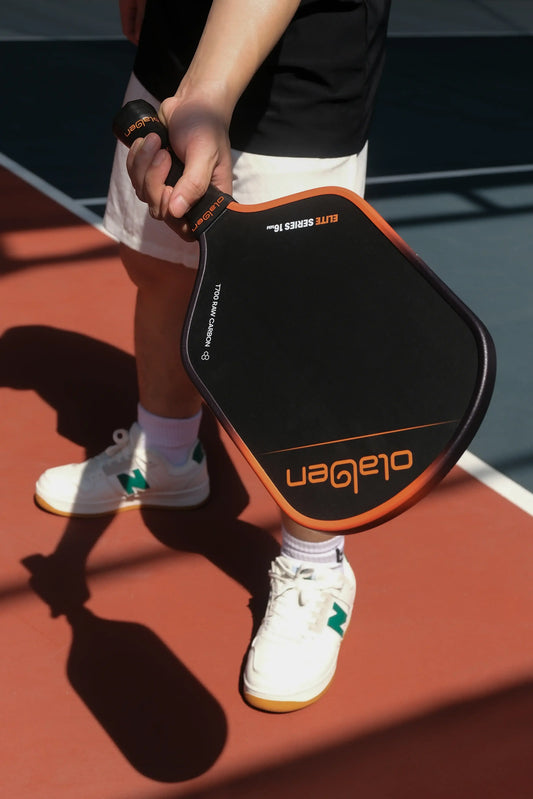
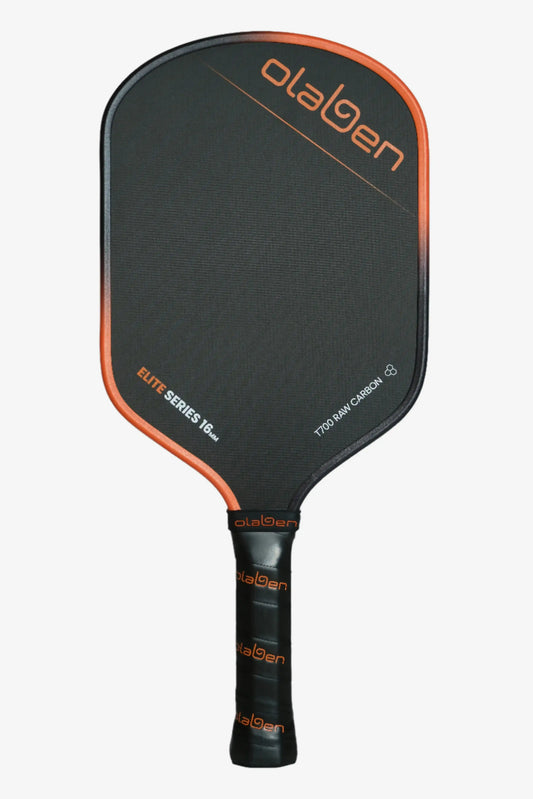
Besides choosing the right paddle face size for your playing style, players may also consider products from Olaben, a brand known for combining sports performance with modern aesthetics. Olaben’s pickleball paddles are designed with a balanced structure that focuses on hitting feel and stability, making them suitable for both beginners who are just starting to explore pickleball and recreational players who want to enhance their experience on the court.
Within the brand’s pickleball paddle lineup, some notable models include:
These paddles are typically constructed with a polypropylene honeycomb core combined with carbon fiber or fiberglass surfaces, providing stable ball contact, solid control, and effective spin generation in a variety of match situations.
Beyond equipment, Olaben also offers a specialized pickleball apparel collection designed with a minimalist and dynamic style. Items such as short-sleeve sports tops, tank tops, athletic skirts, pickleball dresses, shorts, and accessories are made from flexible, breathable, and moisture-wicking fabrics. These materials help players stay comfortable and move freely throughout the game.
The combination of a well-suited paddle and high-quality sportswear not only helps improve performance on the court but also gives players a greater sense of confidence and a more professional presence every time they step onto the pickleball court.
Frequently Asked Questions About Pickleball Paddle Size
What is the maximum length of a pickleball paddle?
According to the official standards of USA Pickleball, pickleball paddle dimensions are regulated based on the overall size of the paddle, rather than the paddle face alone.
Specifically:
- The maximum paddle length (including the handle) must not exceed 17 inches (about 43.18 cm).
- The combined length and width of the paddle must not exceed 24 inches (about 60.96 cm).
These limits allow manufacturers to design various paddle styles, such as Standard, Hybrid, or Elongated paddles while ensuring that all paddles remain within the same size framework for fair competition.
Which paddle size is suitable for female players?
For female players or beginners, paddles with balanced dimensions and a wider paddle face are generally easier to use. Two common options are Standard paddles and Widebody paddles, as they offer larger hitting surfaces and wider sweet spots, making it easier to connect with the ball.
In addition, these paddles often have moderate lengths and lighter weights, which help players maintain better control when handling shots near the net or when changing direction quickly. As a result, players can maintain greater stability during rallies without needing excessive arm strength.

Conclusion
Although pickleball paddles follow general size limits defined by official regulations, there are still many design variations within those boundaries to suit different playing styles. From the balanced and easy-to-control Standard paddle, the Elongated paddle that enhances reach and power, the versatile Hybrid design, to the Widebody paddle with a larger face for greater stability, each type offers its own advantages on the court.
Choosing the right paddle face size depends not only on technical specifications but also on a player’s skill level, physical ability, and personal playing style. Beginners often benefit from paddles that provide better control and a wider sweet spot, while more experienced players may prefer elongated or power-oriented designs to maximize their on-court performance.