In a yoga studio, few poses capture attention quite like Scorpion Pose. With the entire body balanced on the forearms, the spine deeply arched, and the legs curving overhead like the tail of a striking scorpion, Vrischikasana is often seen as a milestone of advanced yoga practice. In this article, Olaben will help you understand what Scorpion Pose is, the real benefits behind the posture, how to properly prepare your strength and flexibility, and the safest way to practice it step by step.
1. What Is a Scorpion Pose in Yoga?
Vrischikasana is an advanced inversion in which the practitioner balances on the forearms, lifts the body vertically, and then bends the spine deeply so the feet curve toward the head, creating the distinctive shape of a scorpion’s tail.
What makes this pose different from most inversions is its demanding dual challenge: maintaining balance entirely on the forearms while simultaneously performing a deep backbend. This combination is exactly why even experienced yogis often need years of consistent practice to master it.
The posture is also commonly known as Scorpion Pose and is typically considered the culmination of a progressive training journey built upon foundational poses such as:
- Pincha Mayurasana (Forearm Stand)
- Ustrasana (Camel Pose)
- Urdhva Dhanurasana (Wheel Pose)
These preparatory poses help develop the shoulder strength, spinal flexibility, balance, and body control necessary for practicing Vrischikasana safely.

2. Benefits of Scorpion Pose
2.1. Builds Full-Body Strength in the Shoulders, Arms, and Back
To support the entire body on the forearms, the triceps, shoulders, and upper back muscles must work at maximum capacity. Regular practice of Vrischikasana can significantly improve strength in these muscle groups, often in ways traditional gym exercises cannot, because the pose requires full-body control and balance in three-dimensional space.
2.2. Improves Spinal Flexibility and Posture
The deep backbend in Scorpion Pose stretches the entire front body, including the chest, abdomen, and hip flexors while simultaneously strengthening the spinal support muscles. This balance between flexibility and strength can help improve posture during everyday sitting and standing.
2.3. Stimulates the Nervous System and Endocrine Glands
As an inversion, Vrischikasana reverses blood circulation patterns and increases blood flow toward the brain and important endocrine glands such as the pituitary and pineal glands. In traditional yoga philosophy, this is believed to support hormonal balance, promote vitality, and stimulate the central nervous system.
2.4. Enhances Focus and Reduces Anxiety
Maintaining balance in such a complex inversion requires complete mental concentration. The mind becomes fully engaged in the present moment, leaving little room for distracting thoughts or anxiety. This creates a form of moving meditation often associated with advanced yoga inversions, helping release endorphins and promote a positive mental state after practice.
2.5. Supports Core Strength and Fat Burning
Throughout Scorpion Pose, the core muscles, including the abdominals and hips, must remain constantly engaged to stabilize the body. This sustained activation helps tone the waist and midsection while supporting overall calorie burning and body control.

3. Preparing for Scorpion Pose
One of the biggest mistakes many yogis make is attempting Vrischikasana before building a strong enough foundation. Scorpion Pose is not something mastered in a single session, it is the result of months or even years of practicing foundational poses and developing strength, flexibility, and control.
3.1. Essential Preparatory Poses
- Pincha Mayurasana (Forearm Stand): This is the direct technical foundation of Scorpion Pose. You should be able to hold it steadily for at least 30–60 seconds before adding the backbend component.
- Ustrasana (Camel Pose): Helps build the spinal flexibility required for deep backbending. The spine needs to adapt to this movement pattern before adding the challenge of inversion.
- Urdhva Dhanurasana (Wheel Pose): Develops chest opening and deeper spinal extension, preparing the body for the final stage of Scorpion Pose when the feet move toward the head.
- Dolphin Pose Push-Ups: Strengthen the shoulders and forearms, which support the body’s entire weight during Vrischikasana.
3.2. Warm-Up Before Practice
Before attempting Scorpion Pose, properly warm up the shoulders, spine, and upper body:
- Roll the shoulders 10–15 times in each direction to mobilize the shoulder joints.
- Perform 10 standard push-ups to activate the arms and shoulders.
- Hold Ustrasana for about 30 seconds to stretch the front body.
- Practice Pincha Mayurasana against a wall for 1–2 minutes to prepare the body for inversion work.
4. Step-by-Step Guide to Practicing Scorpion Pose
Important Note
When attempting the pose for the first time, practice with a teacher or spotter nearby for support. Using a wall behind you is highly recommended until you feel confident with balance and control.
Step 1: Start from Forearm Stand
Begin kneeling on the mat and place the forearms parallel to each other, elbows shoulder-width apart. Press the palms and forearms firmly into the floor. Lift the hips upward into an inverted “V” shape and shift weight strongly into the shoulders.
Step 2: Move the Hips Beyond the Shoulders
While balancing on the forearms, actively push the hips forward and upward so they move slightly past the shoulder line. This shift must happen before initiating the backbend, skipping this step often causes loss of balance.
Step 3: Gradually Arch the Spine
Once the hips move beyond the shoulders, slowly begin bending the spine. Extend the pelvis away from the head to create a controlled “C” shape through the body. Every movement should remain slow and controlled, never jump or force the backbend.
Step 4: Separate the Knees
As the backbend deepens, gently separate the knees while keeping the big toes touching. This helps distribute body weight more evenly and improves overall balance.
Step 5: Complete the Scorpion Shape
Relax the feet toward the head and lift the gaze upward as if reaching toward the feet. This creates the classic scorpion-tail shape of the pose. Beginners should hold the posture for about 30 seconds and gradually increase duration over time.
Step 6: Exit the Pose Safely
Never collapse out of the posture suddenly. Slowly return the legs back into Pincha Mayurasana first, then carefully lower down to the floor. Rest afterward in Dolphin Pose to release tension from the spine and shoulders.

5. Variations of Scorpion Pose
5.1. Wall-Assisted Scorpion Pose (For Beginners)
Wall-assisted yoga is the safest and most beginner-friendly way to practice Vrischikasana. The wall helps improve balance, reduces fear of falling, and allows the body to gradually adapt to the deep backbend required in Scorpion Pose.
How to Practice
- Place your yoga mat close to a wall and position your forearms on the floor as you would in Dolphin Pose or Pincha Mayurasana. Keep the elbows shoulder-width apart and spread the fingers naturally for stability.
- Position the hands about 50–60 cm away from the wall. This distance is important because standing too close to the wall limits the depth of the backbend.
- Slowly kick one leg upward, followed by the other, until you enter the Forearm Stand with the heels lightly touching the wall.
-
Once stable, begin arching the back gradually by:
- Pressing the chest forward,
- Opening the shoulders,
- Engaging the core lightly for spinal control,
- Bending the knees and lowering the feet toward the head.
- Allow the toes or tops of the feet to lightly touch the wall. Avoid leaning all your weight into the wall, it should serve only as a balancing aid.
- Hold the pose for 5–10 deep breaths, then slowly straighten the legs and lower one foot at a time back to the floor.
Notes
- Do not force the backbend too quickly. Prioritize stability before increasing depth.
- Continue pushing strongly through the shoulders to avoid compressing the neck.
- If you feel pinching or sharp discomfort in the lower back, exit the pose immediately and rest.
5.2. Sole-of-the-Feet-to-Head Variation
This is a more advanced version of Scorpion Pose. Instead of simply reaching the toes toward the head, the chest opens further and the spine bends more deeply until the soles of the feet rest on the crown of the head.
How to Practice
- Begin in the basic Vrischikasana position with the legs already curved toward the head.
- Keep pressing the forearms firmly into the floor while actively lifting the shoulders upward to create space for the neck and spine.
- Slowly deepen the bend in the knees and lower the feet carefully toward the head.
- Expand the chest fully and draw the sternum forward rather than collapsing into the lower back.
- Once the body has enough flexibility and control, gently place the soles of the feet onto the crown of the head.
- Maintain smooth breathing and keep the gaze forward to help stabilize balance.
Note
This variation places significant demand on the shoulders, spine, and lower back. Never force the feet to touch the head if the body is not yet flexible enough or if breathing becomes unstable.
5.3. Headstand Scorpion Pose (Sirsasana Scorpion)
This variation combines Sirsasana with the deep backbend of Vrischikasana. Compared to the forearm-supported version, it requires much greater balance, neck stability, and body control.
How to Practice
-
Begin in Sirsasana:
- Interlace the fingers firmly.
- Place the crown of the head on the mat.
- Position the forearms to create a stable triangular base.
- Slowly lift both legs upward until the body is fully vertical and stable before transitioning into the Scorpion variation.
-
Once balanced:
- Gently bend the knees,
- Lower the feet toward the back of the head,
- Open the chest,
- And slightly push the hips forward.
- Keep most of the body weight supported by the forearms and shoulders rather than pressing heavily into the head.
- Hold the pose for a few steady breaths, then carefully return to Headstand before lowering the legs back down.
Note
This variation is not recommended for people with neck injuries or insufficient Headstand experience. Always practice with control and avoid collapsing into the neck.
6. Choosing the Right Yoga Apparel and Props for Scorpion Pose – Recommendations from Olaben
For an advanced posture like Vrischikasana, yoga apparel is far more than a style choice. Loose tops can slide over the face during inversions, while restrictive pants may limit spinal extension and hip mobility. These issues are not only uncomfortable but can also affect balance and safety.
6.1. Choosing the Right Yoga Top
Olaben offers a range of women’s activewear designed for high-intensity movement and advanced yoga practice.
Sports Bras
A sports bras is often the best option for Scorpion Pose because the shorter fit stays securely in place during inversions. A close-fitting design also makes it easier for both practitioners and instructors to observe spinal and hip alignment for better technique correction.
Tank Tops and Short-Sleeve Tops
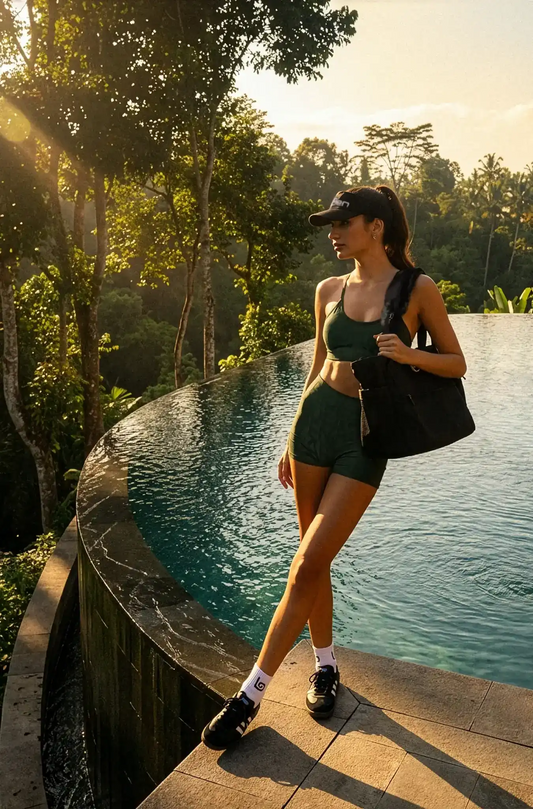
Tank tops and short-sleeve tops are ideal for studio practice or air-conditioned yoga rooms. Keeping the arms uncovered improves forearm grip and friction against the mat, increasing stability during forearm balancing.
Long-Sleeve Tops
Long-sleeve tops are suitable for cooler environments or outdoor practice. Four-way stretch fabric allows complete freedom of movement through the shoulders and arms, essential for practicing Vrischikasana safely. Avoid overly thick fabrics that trap heat and restrict mobility.
Regardless of the style, prioritize breathable, moisture-wicking materials that maintain their shape through dynamic movement.
6.2. Choosing the Right Yoga Bottoms
High-Waisted Leggings
Yoga leggings is the top choice for Scorpion Pose. High-waisted leggings support the core and lower back during inversions while preventing the waistband from slipping. Compression-style fabrics also help maintain comfort and control when the legs lift overhead.
Women’s Shorts
Women’s shorts are better suited for hot yoga or high-intensity Vinyasa sessions. If choosing shorts for Scorpion Pose, make sure the fabric is secure and does not ride up excessively during inversions.
6.3. Essential Yoga Props and Accessories
Non-Slip Yoga Mat
In Scorpion Pose, the yoga mat is the only surface supporting the body against the floor. Choose a mat with:
- 4–6 mm thickness,
- Strong grip,
- And non-slip texture, even during sweaty practice.
A mat that is too thin may create discomfort in the elbows, while an overly thick mat can reduce stability.
Yoga Blocks
Pincha Mayurasana training often becomes easier with yoga socks, which can help adjust height and improve balance during preparation drills.
Non-Slip Yoga Socks
Silicone-grip socks improve stability while transitioning between poses, especially on wooden or tiled floors.
Headbands and Hair Accessories
During inversions, loose hair can fall into the face and become distracting. A secure headband or properly tied hair helps maintain focus and safety throughout practice.
Explore more women’s activewear collections at Olaben, specially designed for high-intensity training and advanced yoga movement.

7. Important Safety Notes for Practicing Scorpion Pose
7.1. Who Should Avoid Scorpion Pose
Vrischikasana is not suitable for:
- People with shoulder, neck, back, or spinal injuries, especially during recovery periods.
- Individuals with high blood pressure, as inversions can increase pressure toward the head.
- People with glaucoma, since inverted poses may raise intraocular pressure.
- Pregnant women at any stage of pregnancy.
- Beginners with less than one year of yoga experience or those who have not yet mastered Pincha Mayurasana.
7.2. Common Technical Mistakes
Skipping the Hip Shift
Many practitioners try to arch the back immediately after entering the Forearm Stand. This often causes sudden loss of balance backward. The hips must move beyond the shoulders first, only then should the backbend begin.
Letting the Elbows Slide Outward
Elbows wider than shoulder-width create an unstable foundation. Keep the elbows aligned directly under the shoulders throughout the pose.
Holding the Breath
When under tension, many people instinctively stop breathing. In Scorpion Pose, breath-holding increases muscle tightness and raises the risk of injury. Smooth, controlled breathing is one of the clearest signs that the pose is being practiced safely.
Exiting the Pose Too Quickly
Never collapse out of the pose or drop the legs suddenly. Always control each movement carefully while coming out of the inversion.
Conclusion
Vrischikasana demonstrates that yoga is far more than flexibility or relaxation, it is a practice of strength, discipline, patience, and body awareness. Scorpion Pose is not mastered within a few weeks, but the journey of building foundational strength and control is where the true physical and mental transformation happens.
One detail that is often overlooked is that proper apparel and equipment are also part of practicing safely and effectively. Supportive activewear, a high-quality yoga mat, and the right accessories can significantly reduce distractions and improve stability during advanced inversions.
Prepare carefully both physically and mentally before beginning the journey toward mastering one of yoga’s most iconic poses.