In golf, each club is not merely defined by its design, but by the distinct role it fulfills in every stroke. Understanding the differences among golf clubs and the specific purpose of each, empowers golfers to select the right club, manage distance with greater control, and enhance accuracy on the course. Whether you are new to the game or a seasoned player, Olaben guides you in mastering the art of club selection for every scenario, helping refine technique and elevate overall performance.
An Overview of a Standard Golf Club Set
A standard golf set is thoughtfully composed to equip players for virtually every situation encountered on the course. The most common configuration includes 12 essential clubs: three woods (typically the 1, 3, and 5 wood) designed for long-distance shots; eight irons ranging from 3 to 9, along with a pitching wedge, for controlled distance management and precise approach shots to the green; and one putter, used for the final strokes on the green.
In addition, many modern golfers opt to incorporate hybrid clubs, a versatile blend of wood and iron, valued for their forgiveness, stable ball flight, and suitability across varying skill levels. Under the Rules of Golf, a player may carry a maximum of 14 clubs in their bag. This allows room for strategic customization, enabling golfers to add one or two additional clubs, whether woods, irons, or wedges to complement their playing style and optimize their competitive approach.
Popular Types of Golf Clubs Today
Driver (1 Wood)
Design Characteristics
The Driver features the largest clubhead in a golf bag, typically crafted from titanium or ultra-light alloys to maximize clubhead speed and generate exceptional distance. Its loft generally ranges from 9 to 12 degrees, depending on a golfer’s skill level and swing speed.
The shaft is longer than that of other clubs, enabling a wider swing arc that produces greater power and enhances carry distance. A broad clubface and expanded sweet spot help minimize off-center strikes, delivering improved forgiveness and stability off the tee.
When to Use
The Driver is most commonly used for the opening tee shot, particularly on long par 4 and par 5 holes. It is the preferred choice when maximizing distance from the outset is essential.
However, to use the Driver effectively, a golfer must maintain a consistent swing and solid directional control. When executed properly, it offers a significant positional advantage for subsequent shots.

Fairway Wood
Design Characteristic
Fairway Woods belong to the long-club category, featuring a large yet more compact head than the Driver and a shallower clubface, making clean contact easier when the ball rests directly on the turf. Their loft is typically higher than that of a Driver, commonly ranging from 13 to 18 degrees or more, allowing for a higher, more stable ball flight on long shots.
The sole is engineered to glide smoothly across the fairway, reducing turf resistance and supporting a fluid strike. With a moderately long shaft, the Fairway Wood generates substantial power while maintaining control, making it suitable for both beginners and experienced players alike.
When to Use
Fairway Woods are ideal for long shots from the fairway, especially on lengthy par 4s or par 5s when advancing the ball close to the green in one or two strokes is the objective. Many golfers also choose a Fairway Wood off the tee on shorter holes or when seeking greater control and safety than a Driver can provide.

Hybrid
Design Characteristics
The Hybrid artfully combines the strengths of both irons and woods, offering versatility and ease of play. Its head is more compact than a Fairway Wood, yet retains a hollow construction and low center of gravity, helping the ball launch effortlessly from the turf.
Compared to woods, Hybrids often feel more solid and stable at impact. The rounded sole and thoughtfully contoured face reduce turf interference, making it especially effective when the ball lies in thick rough or challenging terrain. Hybrid lofts typically range from 19 to 27 degrees, serving as practical replacements for long irons that many golfers find difficult to strike consistently.
When to Use
Hybrids excel in recovery situations, lifting the ball from heavy rough or difficult lies with confidence and controlled trajectory. Their forgiving design allows players to regain stability without requiring excessive force.
They are also highly effective for mid- to long-range fairway shots, particularly when a golfer desires greater ease and consistency than long irons typically provide. As one of the most user-friendly clubs in the bag, the Hybrid suits both newcomers and experienced players seeking precision in demanding scenarios.

Irons
Design Characteristics
In the early days of the game, irons were forged primarily from solid iron. Today, thanks to advancements in manufacturing technology, clubheads are typically crafted from stainless steel or premium alloys to enhance durability, optimize weight distribution, and refine impact feel.
The clubface features precisely engineered grooves that generate spin and allow for superior trajectory control. Compared to wood, iron heads are thinner, with the center of gravity carefully calibrated for each numbered club to produce varying launch angles and distances.
A standard iron set usually consists of seven clubs, commonly numbered 4 through 9 along with a Pitching Wedge (P), or alternatively 5 through 9 with a Pitching Wedge and additional wedge. As the club number increases, the loft becomes higher, resulting in a higher ball flight but shorter distance.
When to Use
Irons are primarily used for approach shots into the green, as well as mid- to short-range shots from the fairway. Depending on the distance to the pin and course conditions, golfers select the appropriate iron to control trajectory and landing precision.
They are also favored in situations where accuracy takes precedence over sheer distance, particularly when a controlled, consistent shot onto the green is required.

Wedges
Design Characteristics
Wedges are specialized clubs designed for the short game—often regarded as the true “soul” of scoring in golf. The compact clubhead and deeply milled grooves generate substantial spin, enabling precise control over both landing position and roll.
A defining characteristic of wedges is their high loft, typically ranging from approximately 48 to 60 degrees or more. The higher the loft, the higher the ball flight and the shorter the carry distance. Another critical specification is bounce—the angle of the club’s sole—which significantly influences performance across various lies, including sand, thick rough, or firm turf.
Professional golfers often carry three to five wedges to address a wide range of scenarios around the green. For beginners, however, a single 56-degree wedge with around 10 degrees of bounce is generally sufficient to execute most fundamental chip, pitch, and bunker shots.
When to Use
Wedges are employed for short-distance shots around the green, including chips, pitches, flop shots, and bunker escapes. They are the optimal choice when a golfer needs to launch the ball high, stop it quickly, and control its landing with precision.
In moments that demand finesse and touch rather than power, the wedge becomes an indispensable instrument—helping players save strokes and bring refinement to their overall round.

Putter
Design Characteristics
The putter is a specialized club reserved for strokes on the green, playing a decisive role in completing each hole. Unlike other clubs, a putter features a nearly vertical clubface with minimal loft, allowing the ball to roll smoothly across the putting surface rather than lift into the air.
Putter head designs vary widely, most commonly in blade (traditional, streamlined) or mallet (larger, perimeter-weighted) styles. Each design is engineered to optimize stability and enhance feel at impact. Weight distribution is carefully balanced to reduce face rotation, helping the stroke remain aligned with the intended target line.
When to Use
The putter is used once the ball is on the green or the fringe just beyond it where the sole objective is to roll the ball into the hole with the fewest strokes possible. This is the most score-defining moment of any round, requiring focus, refined touch, and the ability to read the line accurately.
Selecting a putter that complements your natural feel and committing to consistent practice, builds confidence and reliability in every stroke. When truly mastered, the putter becomes a source of composure in the most pivotal moments of play.

Important Considerations Before Purchasing a Golf Club Set
Choosing the right golf club set influences not only on-course performance but also the long-term development of a golfer’s technique. Below are key factors to consider before making an investment:
- Define Your Skill Level and Playing Goals: Beginners should prioritize clubs that offer forgiveness, ease of launch, and overall stability. Intermediate and advanced golfers may prefer models designed for enhanced control, refined feedback, and shot-shaping capability. Clearly identifying your goals helps ensure you select the appropriate category of equipment.
- Understand the Club Limit Under the Rules of Golf: A player may carry a maximum of 14 clubs during a round. A standard set typically includes woods, irons, wedges, and a putter. Within this limit, you may strategically add hybrids or specialty wedges to suit your playing style and competitive approach.
- Select the Appropriate Shaft: The shaft directly impacts swing speed, timing, and shot accuracy. Golfers with slower swing speeds generally benefit from a more flexible shaft (such as Regular or Senior flex), while those with faster swing speeds may require a stiffer shaft (Stiff or Extra Stiff) for enhanced control and consistency.
- Consider Loft and Clubhead Design: Loft significantly affects trajectory and distance. Lower lofted clubs produce longer, more penetrating shots, whereas higher lofted clubs promote elevated ball flight and quicker stopping power on the green. Cavity-back iron designs are often ideal for beginners, as they increase forgiveness and reduce the impact of off-center strikes.
- Undergo a Professional Club Fitting: A professional club fitting evaluates factors such as height, arm length, swing speed, and technical metrics to tailor equipment precisely to your physical attributes and swing characteristics. For golfers seeking long-term improvement and optimal performance, this step is highly recommended.
- Establish a Sensible Budget: The golf equipment market spans a wide range of price segments from beginner-friendly sets to premium, tour-level models. Select equipment that aligns with both your budget and your genuine playing needs, rather than being guided solely by brand prestige.
With thoughtful selection and proper guidance, your golf clubs become more than tools, they become refined instruments that elevate every round you play.
Conclusion
Understanding and selecting the right types of golf clubs not only refines technique but also establishes a solid foundation for long-term strategic play. When each club in your bag is chosen with intention, aligned with your skill level, swing speed, and personal playing style, you will notice a distinct difference in every stroke, from the opening drive to the decisive putt.
Yet performance on the course extends beyond equipment alone. Proper golf apparel plays a vital role in supporting movement, enhancing flexibility, and maintaining comfort throughout all 18 holes. Garments crafted from stretchable, moisture-wicking fabrics with tailored silhouettes empower golfers to execute full, dynamic swings with confidence and ease.
At Olaben, golf apparel is thoughtfully developed to strike a refined balance between functionality and style.
- For men, structured sportswear silhouettes deliver a polished, professional appearance while preserving freedom of movement.
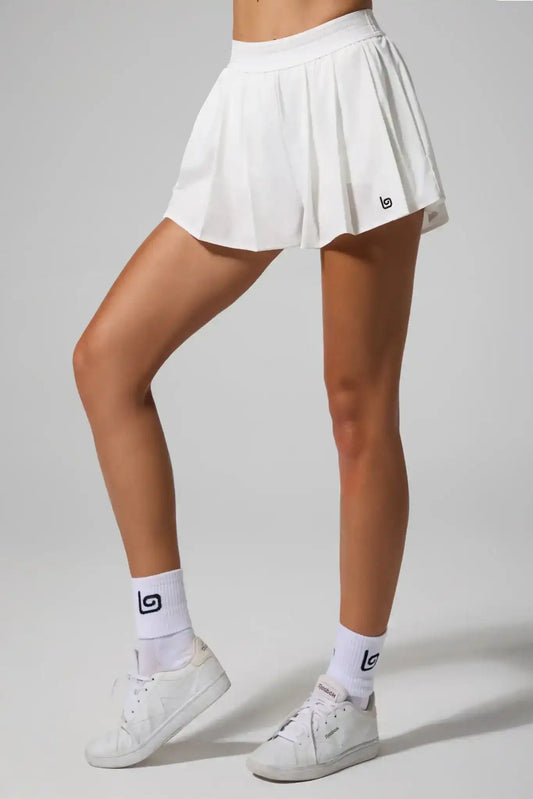
- For women, elegantly contoured athletic tops paired with high-stretch trousers, modern skirts, or performance dresses celebrate femininity while meeting the technical demands of the game.
Complementing the ensemble, accessories such as caps, performance socks, headbands, and golf bags not only complete the aesthetic but also provide practical benefits, sun protection, moisture control, and added convenience during outdoor play.
The harmonious combination of well-fitted clubs and premium apparel is the key to elevating the overall golfing experience, enabling players to maintain consistency, enhance performance, and express their individual style with confidence on the course.